Today · Sep 21, 2026
Your Franchisees Are Already Selling Your Rooms on Airbnb—Here's Why You Can't Stop Them

Your Franchisees Are Already Selling Your Rooms on Airbnb—Here's Why You Can't Stop Them

Marriott properties are undercutting corporate rates by $450 on Airbnb. If it's happening to the biggest brand in the world, it's definitely happening to you.

Three months into my turnaround at a struggling casino resort, I walked into what I thought was an empty room to find a guest making coffee. The front desk swore the room was vacant. Turns out, our night manager had been renting 'dead' inventory on Craigslist for cash.

That same entrepreneurial spirit—minus the cash grab—is now playing out across Marriott's portfolio, and corporate is losing their minds.

Marriott properties are secretly listing rooms on Airbnb at rates up to $450 below what corporate is charging on the main booking engine. We're not talking about a rogue night manager here. These are franchisees who've apparently decided that 60% occupancy at market rates beats 40% occupancy following brand standards.

Here's what makes this fascinating: Marriott corporate genuinely can't stop it. Sure, they can threaten franchise agreements, but what are they going to do—pull flags from properties that are actually filling rooms? In a market where occupancy is still recovering, that's an expensive game of chicken.

The math is simple. A franchisee pays Marriott roughly 12-14% in combined fees. If they can fill 30 more rooms a month by undercutting corporate rates, even at lower ADR, they're often coming out ahead. Marriott gets their fees either way, but loses control of their rate integrity.

What's really happening here is a fundamental tension in the franchise model. Corporate sets pricing strategies based on brand positioning and market analysis. But the guy writing the mortgage check every month? He's looking at empty rooms and thinking about cash flow.

I've seen this movie before. When corporate pricing doesn't match market reality, operators find creative solutions. The only difference now is that platforms like Airbnb make it easier to execute—and harder for corporate to track.

The real question isn't whether Marriott can stop this. It's whether they should. Because right now, their franchisees are essentially A/B testing pricing strategies in real time. And apparently, the market is telling them that Marriott's rates are wrong.

Operator's Take

If you're an independent operator watching this unfold, pay attention to which Marriott properties in your market are on Airbnb. That's free competitive intelligence about what rates are actually clearing rooms in your area. The biggest hotel company in the world just accidentally gave you a master class in dynamic pricing.

Read full analysis → ← Show less
Source: Google News: Marriott
Marriott's India Bet Will Create the Labor Crisis American Hotels Are Desperate to Solve

Marriott's India Bet Will Create the Labor Crisis American Hotels Are Desperate to Solve

While U.S. hotels scramble for housekeepers at $18/hour, Marriott just signed 99 deals in a country where hospitality is still a career, not a last resort.

The last time I posted a housekeeping position in Vegas, I got three applications in two weeks. One showed up drunk to the interview. The other two never showed up at all.

That was for $18 an hour plus benefits — more than I was making when I started in this business.

Meanwhile, Marriott just announced 99 new hotel deals in India for 2025, leading what they're calling their "record Asia-Pacific expansion." But here's what the press release doesn't tell you: they're not just chasing market share. They're running toward a labor market that still works.

In India, hospitality jobs come with social status. Families celebrate when their kids get hired at international hotel brands. The same position that sits vacant for months in Milwaukee gets 200 qualified applicants in Mumbai.

I've worked turnarounds at properties where half the housekeeping staff quit during a renovation. Not because the work got harder — because Target was offering $19 an hour to fold clothes instead of change sheets. In India, those same positions are career stepping stones, not placeholder gigs.

The real story isn't Marriott's expansion strategy. It's that American hospitality has trained an entire generation to see hotel work as temporary. We've normalized the revolving door, accepted the labor shortage as permanent, and raised wages without raising respect.

India still has both. And Marriott knows it.

While we're burning through Indeed credits trying to fill the same positions over and over, they're building a pipeline in markets where people actually want to work in hotels. Where "hospitality professional" still means something.

Here's the uncomfortable truth: we created our own labor crisis by treating hotel jobs like they don't matter. Now we're watching international brands invest where they're still treated like they do.

Operator's Take

Independent and small chain operators: start recruiting internationally now. Work visa programs, partnerships with hospitality schools abroad, anything. Because while you're competing for the same shrinking local talent pool, the big brands are building global pipelines you can't match.

Read full analysis → ← Show less
Source: Google News: Hotel Development
While Everyone Watches Taj's Luxury Empire, Ginger Hotels Is Quietly Building India's Real Hotel Future

While Everyone Watches Taj's Luxury Empire, Ginger Hotels Is Quietly Building India's Real Hotel Future

The Tata Group's budget brand is expanding faster than McDonald's once did in America. Most operators are looking at the wrong playbook.

Three years ago, I walked through a Ginger property in Bangalore with a GM who'd spent fifteen years running luxury resorts. He kept apologizing for things that didn't need apologies — the compact lobby, the efficient room design, the automated check-in kiosks.

I stopped him mid-sentence. "How's your RevPAR compared to the full-service place next door?"

His sheepish grin told me everything.

That's the story most people miss when they talk about Indian Hotels Company. Yes, the Taj built the empire — iconic luxury properties that defined hospitality in India for over a century. But while industry analysts obsess over Taj's marble lobbies and Michelin-starred restaurants, Ginger Hotels is writing the future of Indian hospitality.

The numbers don't lie. Ginger is expanding at a pace that would make early McDonald's franchisees jealous. We're talking about a brand that's cracking the code on something American hotel companies spent decades trying to figure out: how to deliver consistent, profitable hospitality at scale in emerging markets.

Here's what's brilliant about the Ginger model — they're not trying to be budget Taj properties. They're building something entirely different. Compact, technology-forward, operationally lean. The kind of hotels that pencil out in secondary and tertiary markets where a full-service property would hemorrhage money.

I've seen this playbook before, but never executed this cleanly. When Marriott launched Fairfield Inn in the 1980s, they were chasing the same insight — strip out the services that guests don't actually value, invest heavily in what they do value (clean rooms, consistent experience, reliable WiFi), and watch your margins soar.

But Ginger is doing something even smarter. They're building for the India that's coming, not the India that exists today. Business travelers who grew up on smartphones and expect technology to just work. Domestic tourists who want predictable quality without paying for amenities they'll never use.

The Taj properties will always have their place — prestige projects that anchor the portfolio and capture the luxury segment. But Ginger? That's where the real growth lives. That's where you build a thousand-unit brand that actually makes money.

Most international operators entering India are still trying to transplant their American or European models. Meanwhile, Tata is building from the ground up for local market realities. Which approach do you think wins in the long run?

Operator's Take

If you're planning any India expansion, study Ginger's operational model before you study Taj's. The future belongs to brands that can scale efficiently in Tier 2 and Tier 3 cities — and Ginger is writing that playbook in real time.

Read full analysis → ← Show less
Source: Google News: Hotel Industry
Why UK Tourism Taxes Will Backfire Spectacularly

Why UK Tourism Taxes Will Backfire Spectacularly

Hospitality leaders are begging the Chancellor to scrap visitor levies. They're fighting the wrong battle — and about to lose the war.

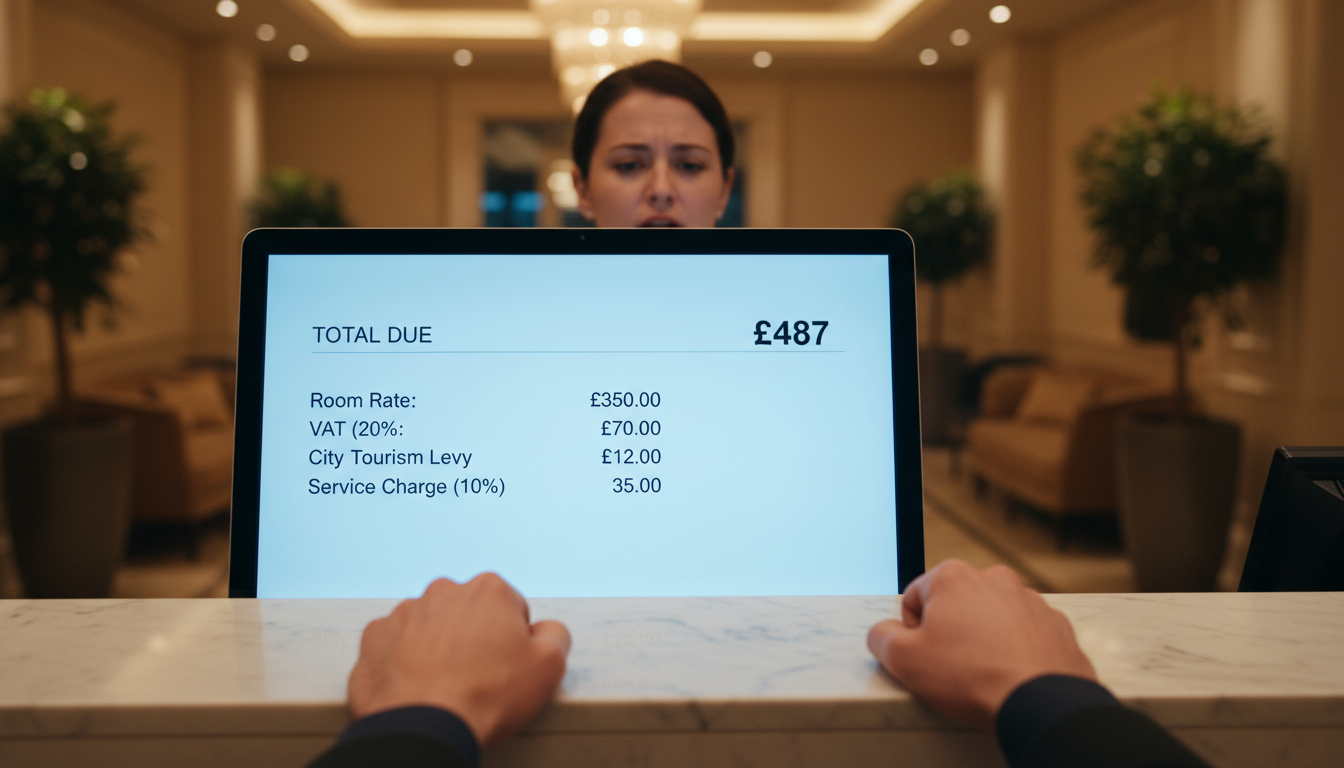
Three years ago, I watched a property manager in downtown Vegas explain to a guest why their $400 room now cost $487 after resort fees, taxes, and parking. The guest's face went through three stages: confusion, anger, then resignation. 'Next time I'm staying in Henderson,' he muttered.

That's exactly what's about to happen across the UK as hospitality chiefs frantically lobby Chancellor Rachel Reeves to abandon proposed visitor levies. They're warning about competitiveness, economic damage, administrative burden — all the usual talking points.

But here's what they're missing: The damage isn't in the levy itself. It's in the psychology.

When Edinburgh introduced its £2-per-night visitor levy, hotels didn't just lose margin — they lost the pricing conversation. Instead of selling the experience, front desk staff became tax collectors. Instead of upselling amenities, they were explaining government fees. Every check-in became a reminder that this city sees you as a cash cow, not a guest.

The real killer? Displacement, not deterrence. Those Vegas guests didn't stop traveling — they drove 20 minutes to Henderson. UK visitors won't stop taking city breaks — they'll book Manchester instead of Edinburgh, Bristol instead of Bath.

I've seen this movie before in Chicago's restaurant scene. When the city kept piling on fees — liquor licenses, sidewalk permits, late-night surcharges — we didn't raise menu prices proportionally. We couldn't. Instead, margins got crushed while we played accountant for the city.

The Chancellor will probably ignore the lobbying anyway. Politicians love tourist taxes because visitors don't vote. But here's the operational reality no one's discussing: Every property will handle this differently. Some will absorb it, some will add it transparently, others will bury it in booking fees. The market will fragment, comparison shopping will become impossible, and guest trust will evaporate.

What hospitality leaders should be demanding isn't the scrapping of visitor levies — it's standardization. Same rate, same collection method, same guest communication across all properties. Make it invisible, not optional.

Operator's Take

Independent operators: Start planning your levy strategy now, not after implementation. Your chain competitors will have corporate policies — you'll be winging it. Budget 2-3 hours of staff training per property, update your booking systems, and script your front desk responses. The properties that handle this smoothly will gain market share from the ones that fumble guest communications.

Read full analysis → ← Show less
Source: Google News: Hotel Industry
Marriott's 36,000-Room China Bet Just Changed the Game for Every Independent Hotel in America

Marriott's 36,000-Room China Bet Just Changed the Game for Every Independent Hotel in America

While you're fighting for ADR increases, Marriott just added more rooms in China than most cities have total. Here's why that math problem is about to become your problem.

The call came at 6 AM from my buddy who runs a boutique property in Portland. "Did you see the Marriott news?"

I hadn't. But I knew from his tone it wasn't good.

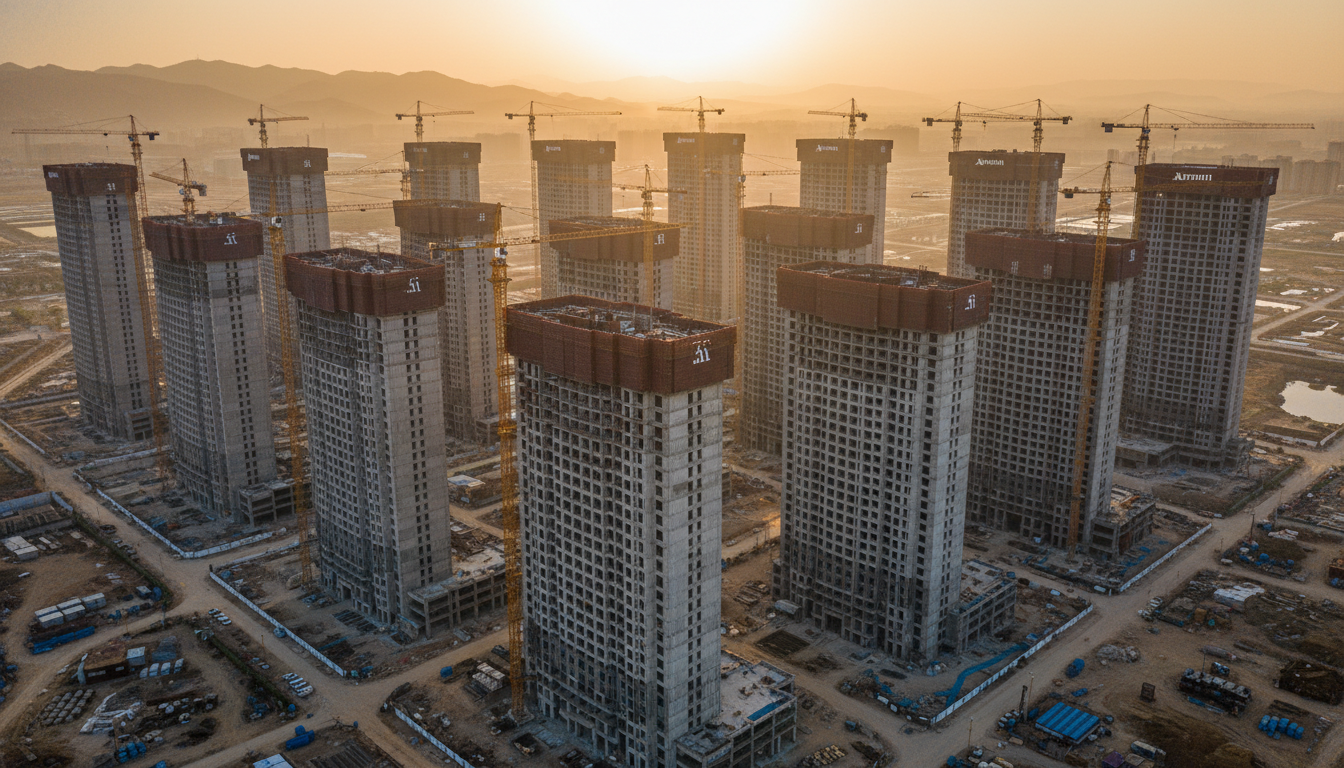
Marriott International just announced over 200 new deals in Greater China — 36,000 rooms in what they're calling a "jaw-dropping growth surge." That's more inventory than the entire city of Sacramento. Added in one announcement.

Here's what that phone call taught me, and what every independent operator needs to understand: This isn't just about China.

When the world's largest hotel company adds 36,000 rooms to their system, it doesn't just shift supply and demand in Shanghai. It shifts their entire global strategy. More rooms means more leverage with OTAs. More data points for revenue optimization. More buying power for everything from linens to light bulbs.

But here's the part that should keep you up tonight — it also means more desperation to fill those rooms.

I've seen this movie before. In 2019, when Marriott was still digesting Starwood, they flooded certain markets with promotional rates just to maintain occupancy targets. Properties that had been running 75% occupancy suddenly found themselves competing against Marriott hotels offering corporate rates to leisure travelers.

The math is simple: 36,000 new rooms need to hit occupancy targets. When those China properties inevitably face economic headwinds or travel restrictions, where do you think Marriott's revenue managers will look to make up the shortfall?

Every discounted rate they push through their global distribution system. Every corporate contract they underbid to hit system-wide numbers. Every loyalty program promotion they launch to drive direct bookings — it all lands on your doorstep.

The independent hotel that could compete on service and local knowledge? That advantage just got a lot more expensive to maintain.

Operator's Take

If you're running an independent property, this is your wake-up call to stop competing on rate and start competing on something Marriott's 36,000 new rooms can't replicate: authentic local experience. Because in six months, you won't be able to afford the rate game anyway.

Read full analysis → ← Show less
Source: Google News: Marriott
The Joint Venture IPO That Reveals How Hotel Ownership Is Really Changing

The Joint Venture IPO That Reveals How Hotel Ownership Is Really Changing

Accor and InterGlobe aren't just going public — they're showing us the blueprint for how hotel companies will survive when nobody wants to own real estate anymore.

Three years ago, I watched a Millennium owner spend six months trying to sell a perfectly good 200-room property in a solid market. The issue wasn't the hotel — it was finding anyone who actually wanted to own hotel real estate anymore.

That's the real story behind Accor and InterGlobe weighing an IPO for their joint hospitality venture in India. Sure, the headlines will talk about growth capital and market expansion. But here's what's actually happening: two smart companies are creating a vehicle that lets them scale without the burden of ownership.

This isn't just about India. This is about the future of hotel development everywhere.

Think about it — Accor brings global brand power and operational expertise. InterGlobe brings local market knowledge and development capability. The IPO gives them access to public capital markets. But most importantly, it creates a structure where they can grow their footprint without tying up their balance sheets in real estate.

I've seen this movie before, just on a smaller scale. The most successful operators I know stopped buying properties years ago. They figured out how to grow their management contracts, their revenue streams, and their market presence while letting someone else worry about the mortgage payments and the capital expenditures.

Now imagine that strategy at enterprise scale, with public market funding, in one of the world's fastest-growing hospitality markets.

What makes this particularly clever is the timing. Hotel valuations are still recovering from the pandemic disruption. Construction costs are through the roof. Labor markets are tight everywhere. Traditional hotel ownership models are getting squeezed from every direction.

But management fees? Franchise fees? Those keep flowing regardless of who holds the deed.

The IPO structure lets them tap institutional investors who want exposure to India's growing travel market without the complexity of direct real estate investment. It's hotel growth without hotel ownership — exactly what the market has been asking for.

Here's the part that should make every independent owner nervous: if this works, every major hotel company will copy it. We're looking at the potential industrialization of hotel development, where global brands can scale faster than ever while local operators get squeezed out by better-capitalized competitors.

The winners will be brand companies with strong operational systems and access to capital. The losers will be traditional owners who think real estate ownership is still the path to hospitality profits.

Operator's Take

Independent owners: watch this closely. If Accor's asset-light IPO model works in India, expect every major brand to replicate it in your market. Start thinking about how you compete when brands can scale without balance sheet constraints — because that future just moved a lot closer.

Read full analysis → ← Show less
Source: Google News: Accor Hotels
UK Hotels Just Showed American Operators How Not to Fight a Tax Battle

UK Hotels Just Showed American Operators How Not to Fight a Tax Battle

British hotel companies are begging their government to scrap a proposed holiday tax. Their weak-kneed approach is a masterclass in how to lose before you even start fighting.

Three years ago, I watched a general manager from a major brand property literally beg a city council to reduce their occupancy tax increase from 4% to 3%. Hat in hand, voice shaking, citing "industry hardship." The council voted unanimously for 5% instead.

That's exactly what's happening across the pond right now — and it's painful to watch.

UK hotel companies are "urging" their government to abandon a proposed holiday tax that would hit travelers during peak seasons. According to reports, they're making the same tired arguments we've all heard before: it'll hurt tourism, damage competitiveness, impact jobs.

Here's what they're not doing — and what American operators better learn before our own politicians get similar bright ideas.

They're not showing up with data that politicians actually care about. Not tourism revenue (politicians expect that argument) — but tax revenue LOSS when demand shifts to neighboring countries. Not job impact projections — but specific voter district employment numbers.

They're not positioning themselves as the solution. Instead of "please don't tax holidays," try "here's how we increase tourism revenue 300% more effectively than this tax ever could."

Most importantly, they're not making it personal for the decision-makers. Every mayor, every council member has relatives who travel. Frame this as "your sister's family vacation just got 15% more expensive" and watch how quickly the conversation changes.

The UK hotel industry is about to lose this fight not because their arguments are wrong, but because their strategy is weak. They're playing defense when they should be playing offense.

American operators watching this unfold — take notes. Because the politician who sees how easy it was to tax hotels in London is already drafting similar proposals for your market.

Operator's Take

Stop lobbying like you're asking for charity. Start lobbying like you're offering solutions. The hotel company that figures this out first will own the conversation when tax battles hit their market.

Read full analysis → ← Show less
Source: Google News: Hotel Industry
The Hotel Giants Just Told Us Who's Getting Squeezed in 2026

The Hotel Giants Just Told Us Who's Getting Squeezed in 2026

Hilton, Hyatt, and Marriott's latest financials reveal a brutal reality coming for mid-market operators — and the window to prepare is closing fast.

The call came at 6:47 AM on a Tuesday. My buddy Jake, who runs a 180-room Courtyard in Kansas City, sounded like he'd been up all night. 'Mike, I just got off a conference call with the brand team. They're talking about 'optimization strategies' and 'market positioning adjustments.' You know what that means, right?'

I did. Because I'd heard that exact language three times before — right before everything changed.

Hilton, Hyatt, and Marriott just dropped their financial results, and buried in the earnings calls was a story that should make every mid-market operator pay attention. While the headlines focused on strong performance and optimistic projections, the real story was in what they didn't say — and what they're quietly preparing for.

Here's what I saw in those numbers that nobody's talking about: All three giants are positioning for a massive squeeze play in 2026. Their capital allocation, their technology investments, their franchise fee structures — it's all building toward the same endgame.

They're going to force independent mid-market properties into an impossible choice: join us or get crushed by us.

Look at the pattern. Marriott's pushing aggressive technology requirements that'll cost mid-market franchisees six figures to implement. Hilton's doubling down on loyalty program integration that requires massive data infrastructure investments. Hyatt's 'rightsizing' their portfolio by culling underperforming properties — but their definition of 'underperforming' keeps shifting upward.

I've seen this movie before. In 2019, we had 47 independent hotels in my market. Today? Nineteen. And that was before these new pressures.

The financial results revealed something else: all three are sitting on massive cash reserves while simultaneously tightening franchise requirements. That's not coincidence — that's strategy. They're preparing to acquire distressed assets when the squeeze hits.

Here's the brutal math that's coming: By 2026, the technology requirements alone will cost mid-market properties $150,000-$300,000 annually just to stay compliant. Add in rising franchise fees, mandatory renovation cycles, and new staffing requirements, and you're looking at an additional $500,000+ per year in operational costs.

How many 150-room properties can absorb that without passing massive rate increases to guests who are already feeling pinched?

The smart operators I know are already making their choice. Some are selling now while values are still decent. Others are going all-in on independence, building their own tech stacks and direct booking engines. But most are just hoping it won't be as bad as it sounds.

It will be worse.

Operator's Take

If you're running a mid-market property under any of the big three flags, stop waiting for 2026 to figure out your strategy. Run your numbers now: can you absorb $500K+ in additional annual costs, or do you need to start planning your exit? The operators who survive this squeeze are the ones making hard decisions today, not hoping for miracles tomorrow.

Read full analysis → ← Show less
Source: Google News: Marriott
Marriott's CEO Just Called the End of Business Travel As We Know It

Marriott's CEO Just Called the End of Business Travel As We Know It

While everyone debates remote work, Tony Capuano sees something bigger — a permanent shift that's about to reshape every revenue strategy in hospitality.

The last time I watched a CEO call the end of an era, it was 2008. The guy running our management company stood in front of 200 GMs and said, "Gentlemen, the party's over." He was talking about easy credit and 80% occupancy rates. Half the room thought he was being dramatic.

He wasn't.

Now Marriott's Tony Capuano is making another one of those calls — and this time it's about something even more fundamental than financing. He's talking about how Americans spend money on travel, period.

Capuano isn't just seeing slower business travel recovery. He's watching the entire category get redefined. The three-day sales trip is becoming a video call. The quarterly face-to-face is becoming annual. The "let's meet in person" default is becoming "do we really need to travel for this?"

But here's what everyone's missing while they focus on the business travel decline: leisure travelers are picking up behaviors that used to be purely corporate. They're booking shorter stays. They're more price-sensitive. They're treating hotels like commodities instead of experiences.

The road warrior who used to book your mid-tier property 15 nights a month? He's down to five, and he's shopping on price like he never did before. The leisure guest who used to splurge on vacation? She's comparing your rates to Airbnb and asking why your resort fee exists.

This isn't a pandemic hangover that's going to fade. This is the new normal — and most operators are still pricing and positioning like it's 2019.

What Capuano sees is a guest who's fundamentally changed their relationship with hospitality spending. They've learned they can live without a lot of what we thought was essential. And once that lesson gets learned, it doesn't get unlearned.

Operator's Take

Independent operators: Stop waiting for 2019 to come back. Your new revenue strategy starts with accepting that today's guest — business or leisure — shops like a commodity buyer. That means your value proposition better be bulletproof, because loyalty just got a lot more expensive to earn.

Read full analysis → ← Show less
Source: Google News: Marriott
Hilton's Conversion Strategy Reveals the Death of Hotel Brand Loyalty

Hilton's Conversion Strategy Reveals the Death of Hotel Brand Loyalty

While Hilton's CEO celebrates new brands and conversion growth, the real story is what this says about how guests choose hotels in 2024 — and why your brand flag might matter less than you think.

Three months after we switched from Marriott to Hilton at our downtown property, I ran the numbers on guest complaints. Zero mentions of the brand change. Not one.

The calls were about WiFi speed, breakfast hours, and parking rates — the same operational issues we'd always dealt with. It hit me: our guests cared more about their Tuesday morning coffee being hot than whether we flew a Marriott or Hilton flag.

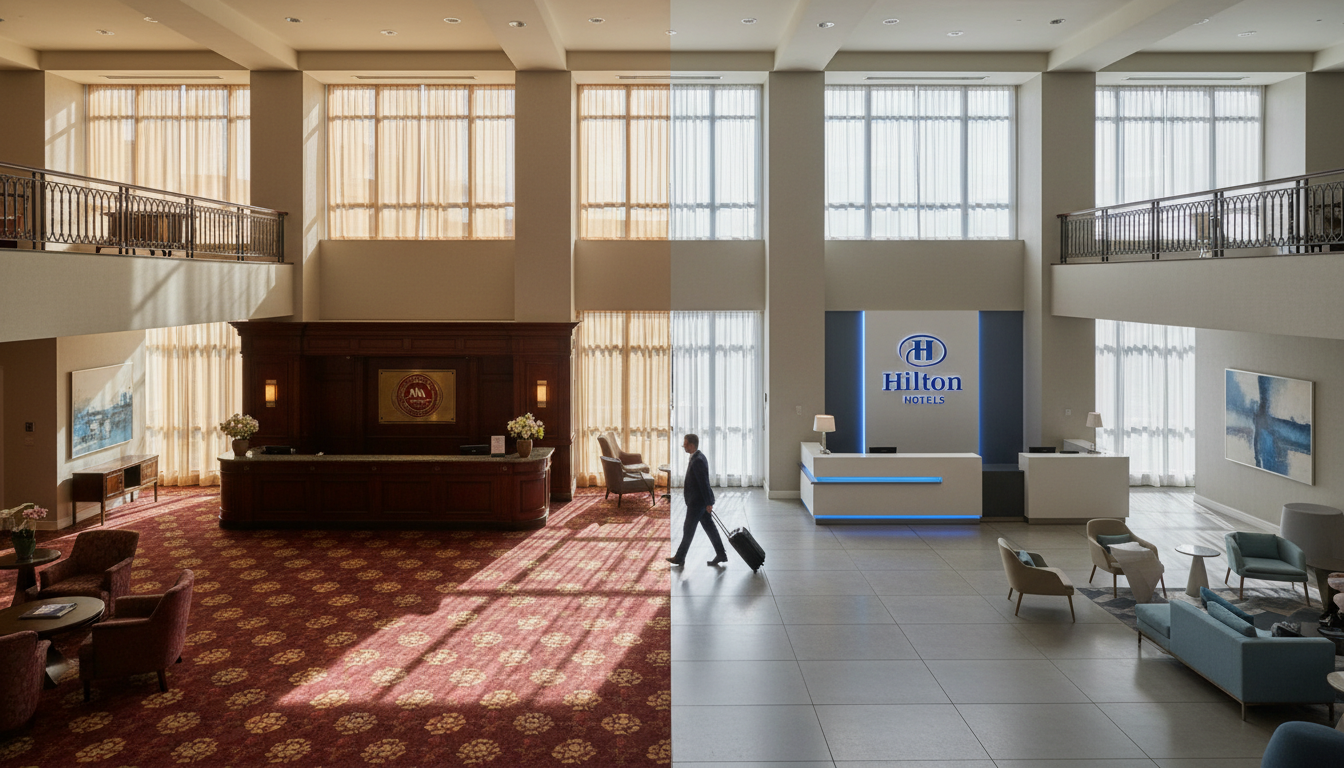
Hilton CEO Christopher Nassetta just doubled down on this reality, telling investors that conversions remain 'integral' to the company's growth while touting new brand launches. Translation: hotels are switching flags faster than ever, and it's working because guests barely notice.

This isn't about Hilton being aggressive — it's about a fundamental shift in how people choose hotels. The brand loyalty that built this industry over decades is dying, replaced by price comparison apps and Google reviews.

When a hotel converts from Marriott to Hilton, the renovation budget goes to new signage and maybe lobby furniture. But the real value proposition stays the same: location, cleanliness, and service execution. The stuff that actually determines whether someone leaves a five-star review.

Nassetta's betting that in 2024, a Hilton reservation system and loyalty program can deliver more bookings than brand heritage. Given that conversions are 'integral' to their strategy, they're probably right.

Here's what's really happening: the internet killed brand mystique. Guests research every detail before booking, read recent reviews, and compare prices across platforms. By the time they walk into your lobby, they've already decided if you're worth their money based on factors that have nothing to do with which corporate headquarters gets your franchise fees.

For independent hotels, this should be liberating. For legacy brand operators watching their franchise fees fund competitor acquisitions, it should be terrifying.

The hotel business is becoming what restaurants figured out years ago — execution trumps branding, and customers will follow value wherever it leads them.

Operator's Take

If you're an independent hotel owner, stop envying branded properties and start competing on what actually matters: guest experience and operational excellence. If you're paying franchise fees, ask yourself if that brand flag is worth 6% of revenue when your guests are choosing you for reasons that have nothing to do with corporate marketing.

Read full analysis → ← Show less
Source: Google News: Hilton
While You Were Sleeping, Hotel Distribution Just Changed Forever

While You Were Sleeping, Hotel Distribution Just Changed Forever

Radisson and Amadeus just flipped the switch on AI-powered booking connectivity. If you think this is just another tech announcement, you're about to get blindsided.

Three months ago, I watched a revenue manager at a 180-room independent property spend four hours manually updating rates across six different channels. Every morning. Same routine — log into each OTA, cross-reference demand signals, pray the inventory sync didn't break overnight.

She made $52,000 a year to be a human API.

This week, Radisson Hotel Group and Amadeus launched full API connectivity with AI-powered distribution tools that automate exactly that workflow. Real-time inventory management, dynamic pricing adjustments, and demand forecasting — all happening in milliseconds instead of hours.

Here's what the press release won't tell you: this isn't just about Radisson properties getting shinier tech toys. This is about raising the baseline for what travelers expect from hotel booking.

When a guest can book a Radisson room with perfect rate parity, instant confirmation, and seamless modifications across any platform, that becomes the new normal. Every property that can't match that experience starts looking broken by comparison.

The independent hotels still manually updating rates? The small chains still dealing with booking lag times? They're not competing with Radisson anymore — they're competing with the expectation Radisson just set.

I've seen this movie before. When Marriott rolled out mobile check-in, suddenly every hotel without it felt outdated. When Hilton perfected digital key technology, guests started asking "why can't I do that here?"

The brutal reality is that hospitality technology moves in waves, not gradual progressions. One major player adopts something seamlessly, and suddenly everyone else is scrambling to catch up or explain why they're behind.

That revenue manager I mentioned? She's probably updating her LinkedIn profile right now. Because properties that can afford AI-powered distribution tools don't need humans doing what algorithms can do better, faster, and without bathroom breaks.

But here's the opportunity everyone's missing: while the big chains fight over who has the smartest robots, there's still massive value in being the property that understands what those robots can't replicate — genuine hospitality intelligence.

The question isn't whether you can match Radisson's API capabilities. The question is whether you can deliver something worth booking even when the booking process itself becomes completely commoditized.

Operator's Take

Independent and small chain operators: you have six months before guests start expecting this level of booking sophistication everywhere. Either invest in tech partnerships that can match this capability, or double down on being so remarkable that booking friction becomes irrelevant. The middle ground just disappeared.

Read full analysis → ← Show less
Source: Google News: Radisson
Hyatt's ChatGPT Gamble Shows Why Your Property is Already Behind

Hyatt's ChatGPT Gamble Shows Why Your Property is Already Behind

While most hoteliers debate whether AI is real or hype, Hyatt just launched a ChatGPT app. The gap between forward-thinking brands and everyone else isn't closing — it's accelerating.

Three months ago, I watched a guest services manager at a competitor property spend twenty minutes on hold with corporate, trying to find availability at sister properties for a displaced VIP guest. Twenty minutes. The guest left.

That same week, I'm hearing Hyatt's CEO talk about their new ChatGPT app that instantly searches availability across their entire portfolio — plus gives travel recommendations, handles special requests, and learns guest preferences.

Here's what's really happening: While most of us are still figuring out if AI is legitimate or just another tech fad, the big brands are already building competitive moats with it.

Hyatt's CEO isn't just talking about efficiency gains. He's describing a completely different guest experience. Imagine a guest asking "I need a suite in Chicago next week for my anniversary" and getting back not just availability, but restaurant recommendations based on their previous dining preferences, upgrade options based on their loyalty status, and suggestions for similar romantic getaways at other Hyatt properties.

That's not replacing human service — it's amplifying it. Your front desk team isn't spending time on database searches; they're spending time on the things that actually matter to guests.

But here's the uncomfortable truth: If you're an independent operator still debating whether to implement basic property management upgrades, you're not competing in the same league anymore. The technology gap between branded and independent properties was already significant. AI is about to make it a chasm.

The brands aren't just adopting AI for internal efficiency. They're using it to create guest experiences that independents can't match without serious investment in both technology and training.

This isn't about keeping up with the Joneses anymore. This is about staying relevant in a market where guest expectations are being reset by properties that can deliver personalized service at scale.

Operator's Take

Independent operators: If you haven't started exploring AI tools for your property, you're not behind — you're being left out. Start small: AI-powered guest communication, automated upselling, or inventory management. The brands are using AI to set new service standards that your guests will expect from you too.

Read full analysis → ← Show less
Source: Google News: Hyatt
Hyatt's 90% Asset-Light Plan Isn't About Hotels — It's About Landlords

Hyatt's 90% Asset-Light Plan Isn't About Hotels — It's About Landlords

When hotel companies stop owning real estate, someone else starts calling the shots. And that someone isn't thinking about your guest experience.

Three years ago, I watched a Millennium property get sold to a REIT. Same name on the building, same management contract, same everything — except suddenly every capital request had to go through guys in New York who'd never walked a hotel corridor.

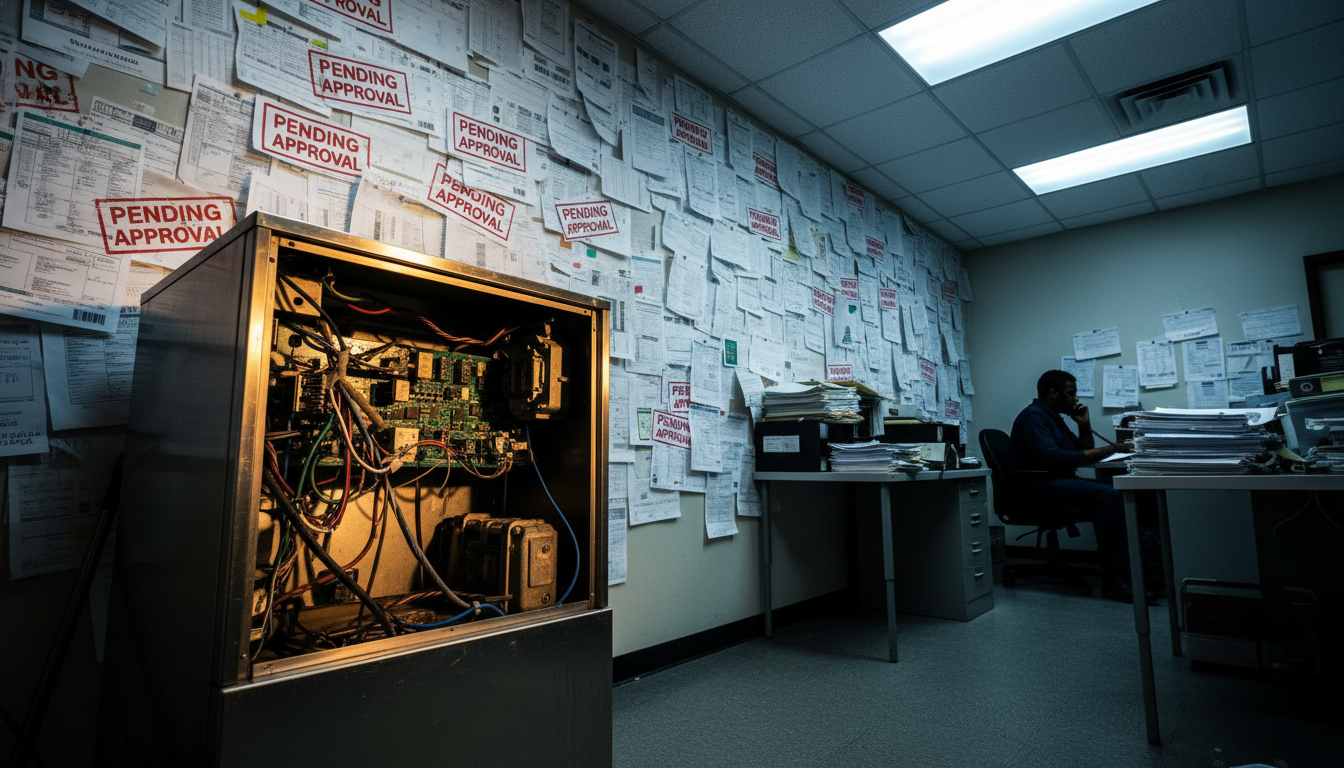
The ice machine on the third floor stayed broken for eight months.

Hyatt just announced they're targeting 90% asset-light operations — meaning they'll manage properties they don't own. They're calling it "strategic focus" and "capital efficiency." Wall Street's calling it brilliant.

I'm calling it the beginning of the end of hotel companies actually caring about hotels.

Here's what happens when you don't own the building: Every decision becomes a negotiation. That lobby renovation your guests desperately need? Now it's a six-month approval process with an investment committee that measures success in cap rates, not TripAdvisor scores.

The PMS system that crashes twice a week? "Not in this year's budget."

The staffing levels that would actually deliver the brand promise? "Labor costs are already above target."

When Marriott or Hilton owns a property, bad guest reviews hurt their asset value directly. When they just manage it, bad reviews are someone else's problem — as long as the management fees keep flowing.

Hyatt's betting they can maintain brand standards through management contracts and franchise agreements. They're wrong. You can't deliver premium hospitality with someone else's checkbook.

The real story here isn't about Hyatt becoming more efficient. It's about hotel companies becoming landlord-dependent. And landlords don't care if your Wi-Fi works — they care if the rent check clears.

Every asset-light conversion is a property that will slowly drift from brand standards toward the minimum viable guest experience. The decline won't happen overnight. It'll happen one deferred maintenance item at a time, one understaffed shift at a time, one "that's not approved" at a time.

Hyatt's shareholders will love the improved margins. Hyatt's guests will wonder why everything feels a little cheaper, a little slower, a little more like every other hotel.

The ice machine will stay broken for eight months.

Operator's Take

If you're managing a property Hyatt's about to sell, start documenting every deferred maintenance item now. When the new owners ask why revenue's declining, you'll need receipts showing what they wouldn't approve. And if you're thinking about joining an asset-light brand? Ask who really controls the capex budget. That's who really controls your guest satisfaction scores.

Read full analysis → ← Show less
Source: Google News: Hotel Industry
The $50 Million Question: Can You Automate Your Way Out of Labor Problems?

The $50 Million Question: Can You Automate Your Way Out of Labor Problems?

UNISONO just bet big on AI automation by acquiring Aphy. But every operator knows the real question isn't whether the technology works—it's whether your guests will notice when the humans disappear.

The night audit clerk at one of my Vegas properties once told me something I'll never forget: 'Mr. Conti, the drunk guests don't care if I'm tired. But they sure as hell notice when nobody's here at all.'

That conversation came flooding back when I saw that UNISONO Hospitality just acquired a majority stake in Aphy, an AI automation company. The press release talks about 'scaling operational efficiency' and 'enhancing guest experiences.' But here's what it's really about: UNISONO is betting they can replace humans with algorithms—and that their guests won't revolt.

I've been through three major technology rollouts in my career. Every single one promised to 'free up staff for more meaningful guest interactions.' You know what actually happened? We freed up the staff right out the door, pocketed the labor savings, and crossed our fingers that nobody would notice.

The math is seductive. Night audit at $15/hour across 50 properties? That's $6.5 million annually you could theoretically save with AI check-ins, automated room assignments, and chatbot guest services. Add housekeeping optimization, predictive maintenance, and F&B automation, and you're looking at real money.

But here's the thing every operator learns the hard way: automation works beautifully until it doesn't. And when it breaks down at 2 AM with a wedding block checking in, or when the AI can't handle the guest whose room key stopped working, you better have a human who knows how to fix it.

The real test isn't whether UNISONO's AI can handle 80% of routine tasks—it probably can. The test is whether their guests will pay the same rates for 80% human service. Because that's the deal they're making, whether they admit it or not.

Every property I've run, the moments that created raving fans weren't the efficient ones. They were the moments when a human being solved a problem the system couldn't handle. When my front desk manager personally drove to CVS at midnight to get a guest's prescription. When the maintenance guy spent an hour helping a elderly guest figure out the TV remote.

You can't automate caring. And you sure can't program the kind of problem-solving that turns a disaster into a story your guest tells for years.

UNISONO might be making a smart financial play—labor costs are crushing everyone right now. But they're also making a bet that their brand can survive the transition from hospitality to efficiency. Some brands can. Most can't.

Operator's Take

If you're running select-service or limited-service properties, watch UNISONO's rollout closely—their wins and failures will preview your future. But if you're competing on service, this might be your biggest opportunity in years. While everyone else automates, double down on the humans. The guests who want robots will go to UNISONO. The guests who want hospitality? They'll pay a premium to stay with you.

Read full analysis → ← Show less
Source: Google News: Hotel AI Technology
When Private Equity Buys Your Competition, They're Really Buying Your Market

When Private Equity Buys Your Competition, They're Really Buying Your Market

Kemmons Wilson Hospitality just acquired Sotherly Hotels' entire portfolio. If you think this is just another transaction, you're missing what's about to happen to room rates in your market.

The call came at 7:23 AM on a Tuesday. "Mike, did you see the news about the Marriott down the street?" My revenue manager's voice had that edge that meant someone just changed our comp set overnight.

That's exactly the conversation happening right now across markets where Sotherly Hotels operates. Kemmons Wilson Hospitality Partners — backed by Ascendant Capital — just completed their acquisition of the entire Sotherly portfolio. Every property. Every market. Every general manager who thought they knew their competitive landscape.

Here's what the press release won't tell you: When experienced hospitality operators acquire distressed portfolios, they don't just fix operations. They reset market expectations.

I've watched this playbook three times. First move: audit every revenue management system. Second move: identify the properties that have been underpricing their markets — and there are always several in a distressed portfolio. Third move: systematic rate optimization across markets where they now control multiple properties.

Kemmons Wilson isn't just buying hotels. They're buying market influence. In secondary and tertiary markets where Sotherly concentrated their footprint, this acquisition just shifted the competitive balance overnight.

The revenue managers calling their GMs this morning aren't overreacting. When private equity-backed hospitality groups acquire portfolios, they're not planning to maintain status quo pricing. They're planning to extract every dollar of revenue potential those properties were leaving on the table.

For operators competing in Sotherly markets, your Tuesday morning just got complicated. Your comp set analysis from last month? Worthless. Your rate strategy for next quarter? Time for a rewrite.

The acquisition announcement talks about "operational improvements" and "enhanced guest experiences." What it doesn't mention is that improved operations typically mean improved rate premiums. And enhanced guest experiences justify higher ADR.

This isn't speculation — it's pattern recognition. Distressed portfolios get acquired for below-market pricing for a reason. The buyers know exactly what those assets should be generating, and they have the capital and expertise to get there.

If you're operating in a market where Sotherly had presence, your competitive landscape just shifted. The property that was historically the rate follower in your comp set? They just got new ownership with very different revenue expectations.

Operator's Take

Independent and small chain operators in Sotherly markets: Run your comp set analysis again. Now. Those Sotherly properties that anchored the bottom of your competitive pricing just got new ownership with private equity return expectations. Your rate positioning strategy for 2024 needs immediate revision — because theirs certainly does.

Read full analysis → ← Show less
Source: Google News: Hotel Acquisition
When Politics Becomes Your Hotel's Problem: The Hilton Frankfurt Wake-Up Call

When Politics Becomes Your Hotel's Problem: The Hilton Frankfurt Wake-Up Call

A routine hotel management deal just became Hilton's geopolitical nightmare. Here's what happens when your business partner becomes someone else's security concern.

The call probably came on a Tuesday morning. Some executive at Hilton's corporate office, coffee still warm, picking up the phone to hear that their Frankfurt hotel deal — the one that was supposed to be routine paperwork — had just landed on the front page of Bloomberg.

The problem? Their business partner has Iranian ownership. In today's world, that's not just a footnote in a contract. That's a crisis management situation.

Hilton is now "reviewing" their management agreement for a Frankfurt hotel after scrutiny over the property's Iranian ownership connections. It's the kind of headline that makes legal departments reach for antacids and makes brand protection teams start drafting memos.

But here's what the press release won't tell you: this is happening everywhere, all the time, in ways most operators never see coming.

I've watched deals die over ownership structures that seemed perfectly clean until someone three layers deep in the investment chain became a problem. Not because they did anything wrong — but because geopolitics doesn't care about your occupancy forecast.

The uncomfortable truth is that in today's environment, your management contract isn't just about operating standards and revenue sharing anymore. It's about who can afford to be associated with whom. And that calculation changes faster than your RevPAR projections.

Think about your own ownership structure for a minute. Do you know every investor? Every pension fund? Every sovereign wealth fund that might have a piece of your financing? Because I guarantee you, someone in Washington or Brussels does.

This isn't just about Iran. It's about the new reality where hotel operators have to be geopolitical risk analysts. Where a perfectly good property can become a brand liability overnight, not because of bedbugs or bad reviews, but because of headlines.

The Frankfurt situation will probably resolve quietly — these things usually do. Hilton will either find a way to make it work or they'll find a graceful exit. But the precedent is set. The message is clear.

Your next contract negotiation just got a lot more complicated.

Operator's Take

If you're signing management deals or franchise agreements, start asking the uncomfortable questions about ownership now. Build exit clauses that cover geopolitical risk, not just performance metrics. Because the phone call that kills your deal might not be about your ADR — it might be about the evening news.

Read full analysis → ← Show less
Source: Google News: Hilton
The Hotel Manager Who Refused to Learn the PMS Got Fired. AI Is Different.

The Hotel Manager Who Refused to Learn the PMS Got Fired. AI Is Different.

Every generation of technology splits hoteliers into two camps: those who adapt and those who get left behind. But AI isn't just another upgrade—it's the great reckoning.

In 2003, I watched a 20-year veteran front desk manager get walked out because she wouldn't learn Opera. "I've been doing this job since before computers," she told me the week before. "Guests want human service, not some machine."

She wasn't wrong about guests wanting human service. She was wrong about thinking technology and humanity were opposites.

Fast-forward to today's AI revolution in hospitality, and I'm seeing the same split—but with stakes that make the PMS transition look like a software update.

Here's what's happening: AI isn't replacing the human touch in hospitality. It's amplifying it for operators who get it, and exposing those who don't.

The boutique hotel in Nashville using AI to predict which guests will complain about noise—and proactively moving them before they check in? Their satisfaction scores jumped 23%. The legacy property down the street still treating AI like a threat to "authentic service"? They're bleeding reviews to competitors who somehow always seem to know exactly what guests need.

But here's the thing nobody's talking about: this isn't about becoming more robotic. It's about becoming more human than you've ever been able to afford.

When AI handles your inventory optimization, your housekeeping schedules, and your revenue management, what's left? The stuff that actually matters. The conversation with the guest whose anniversary dinner reservation got messed up. The split-second decision about whether to comp that room upgrade. The instinct that tells you when a VIP's "everything's fine" actually means "nothing's working."

The operators who survive this transition won't be the ones who learn to code. They'll be the ones who learn to let AI handle the predictable so they can focus on the impossible—turning a transaction into a memory, a complaint into loyalty, a one-night stay into a lifetime relationship.

That front desk manager from 2003? She could have been incredible at this. She understood people better than anyone I've worked with. But she made the choice to fight the tool instead of mastering it.

Don't make her mistake. The question isn't whether AI belongs in hospitality. It's whether you'll be the hotelier wielding it or the one wondering what happened.

Operator's Take

For independent hoteliers: Start with one AI tool that solves your biggest operational headache—revenue management, housekeeping optimization, or guest communication. Master that, then expand. Your guests don't care about your tech stack. They care about feeling seen, heard, and valued. AI just makes those moments possible at scale.

Read full analysis → ← Show less
Source: Google News: Hotel AI Technology
England's Holiday Tax Push Just Handed You Your Best Marketing Campaign

England's Holiday Tax Push Just Handed You Your Best Marketing Campaign

While hospitality bosses are crying foul over proposed tourist taxes, smart operators should be taking notes — this is about to change how guests think about value.

Back when Vegas started charging resort fees, I watched managers panic. "Guests are going to hate this," they said. "We'll lose bookings." Three years later, those same properties were posting record RevPAR numbers.

Now England's hospitality industry is having the exact same meltdown over proposed tourist taxes — and they're missing the point entirely.

The BBC reports that hospitality bosses are urging the government to scrap proposals for holiday taxes across England. They're worried about competitiveness, guest satisfaction, and booking volumes. All legitimate concerns. All the wrong focus.

Here's what they should be worried about: Are you ready for the conversation shift that's coming?

Because when governments start taxing tourism, guests don't just pay the fee and move on. They start asking different questions. "What am I getting for this money?" "Is this experience worth the premium?" "Where else could I go instead?"

I've seen this movie before. In Vegas, properties that treated resort fees like an unfortunate necessity struggled. But the operators who got ahead of it — who used it as an opportunity to articulate their value proposition more clearly — they thrived.

The smart play isn't lobbying against the inevitable. It's preparing for the world where your destination costs more and guests expect more in return.

Start thinking about your answer to: "Why is this worth the tax?" Because that's the question coming to every English tourism market, whether this specific proposal passes or not. The conversation has already started.

Your competitors are busy writing letters to Parliament. While they're doing that, you could be rewriting your guest experience to justify whatever premium is coming.

Operator's Take

Independent hoteliers in tax-heavy markets: Stop competing on price and start competing on story. When guests are paying extra just to be in your city, they're primed to pay extra to stay somewhere that feels special. This is your moment to finally charge what you're worth.

Read full analysis → ← Show less
Source: Google News: Hotel Industry
Marriott's Business Travel Problem Is Your Independent Hotel's Opportunity

Marriott's Business Travel Problem Is Your Independent Hotel's Opportunity

While the world's largest hotel company scrambles to fill empty conference rooms and corporate bookings, smart independents are quietly capturing the market they're leaving behind.

I'll never forget the call I got from a corporate travel manager in 2019. She was frustrated with her company's preferred Marriott property downtown — same generic breakfast, same beige meeting rooms, same robotic service her executives complained about every quarter.

'Mike,' she said, 'we want something different. Somewhere that actually gives a damn.'

That conversation came flooding back this week when Marriott reported missing expectations, with business travel still struggling to recover. But here's what the earnings call didn't mention: those missing corporate guests aren't just staying home. They're finally questioning why they were paying premium rates for commodity experiences.

The real story isn't Marriott's stumble — it's what's happening to those displaced bookings. Corporate travel managers are discovering what leisure travelers figured out during the pandemic: bigger isn't always better, and brand recognition doesn't guarantee memorable experiences.

At my property, we're seeing corporate groups we never would have landed three years ago. Not because we're cheaper (we're often not), but because we're different. We know their names. We remember their preferences. When their CEO walks into our restaurant, the chef comes out to say hello.

This is the moment independent operators have been waiting for without realizing it. While Marriott struggles with the operational complexity of 8,000 properties and the corporate travel market's fundamental shift toward experience over efficiency, nimble independents can pivot faster than any brand manual would ever allow.

The companies still traveling for business? They're the ones that survived the last few years by being different, being better, being memorable. Why would they settle for hotels that aren't?

Operator's Take

If you're running an independent property in a business travel market, this is your window. Corporate travel managers are finally taking meetings with hotels they ignored for decades. But you have maybe 18 months before the big brands figure this out and flood the market with 'boutique' flag programs. Move now.

Read full analysis → ← Show less
Source: Google News: Marriott
The AHLA Recovery Report Just Revealed Which Hotels Are About to Get Left Behind

The AHLA Recovery Report Just Revealed Which Hotels Are About to Get Left Behind

While industry leaders celebrate green shoots, the new data exposes a brutal divide that's about to separate the survivors from the casualties — and it's not what you think.

Three months ago, I watched a GM at a mid-tier property in Cincinnati celebrate hitting 70% occupancy like he'd just won the lottery. Meanwhile, his counterpart at the luxury hotel two blocks over was quietly panicking about the same number — because for him, 70% meant bleeding cash.

That conversation came flooding back when I read the new AHLA recovery report. Because buried in all the industry cheerleading about "steady progress" is a uncomfortable truth: this isn't one recovery. It's three different recoveries happening at completely different speeds.

The luxury segment is roaring back — business travelers with expense accounts don't care about rate premiums when the company's paying. The budget segment never really left — leisure travelers will always need somewhere to sleep, and price wins.

But that massive middle tier? The backbone of American hospitality for decades? They're stuck in hospitality purgatory.

They're too expensive for the budget-conscious leisure traveler who discovered they could survive just fine at a Hampton Inn. And they're not nice enough for the business traveler whose company upgraded travel policies during the talent wars.

Here's what the AHLA report won't tell you: the properties struggling aren't struggling because of lingering pandemic effects. They're struggling because the pandemic accelerated a guest behavior shift that was already happening — and there's no going back.

I've seen this movie before. In Vegas after 2008, we watched entire casino floors get mothballed not because gaming was dead, but because guest expectations had permanently shifted. The properties that survived weren't the ones that waited for "normal" to return. They were the ones that rebuilt their value proposition from scratch.

The uncomfortable question every mid-tier operator needs to ask right now: What exactly are you selling that justifies your rate premium over limited service — and your rate discount from luxury?

Because "we're in the middle" isn't a positioning strategy. It's a death sentence.

Operator's Take

If you're running a full-service property stuck between 60-75% occupancy, stop waiting for corporate travel to save you. Start converting underperforming F&B space into revenue-generating amenities that justify your rates — co-working lounges, fitness concepts, grab-and-go markets. The middle of the market just disappeared. Pick a side.

Read full analysis → ← Show less
Source: Google News: AHLA
End of Stories