Today · Apr 5, 2026
Fairfield Just Landed in the UK. The Brand Nobody There Has Heard Of.

Fairfield Just Landed in the UK. The Brand Nobody There Has Heard Of.

Marriott is planting its second-largest global brand in a country that has zero awareness of what Fairfield means, betting that a museum parking lot in Warwickshire is the right place to start. The question isn't whether the hotel will fill... it's whether "beauty of simplicity" translates when your guest has never seen one.

Available Analysis

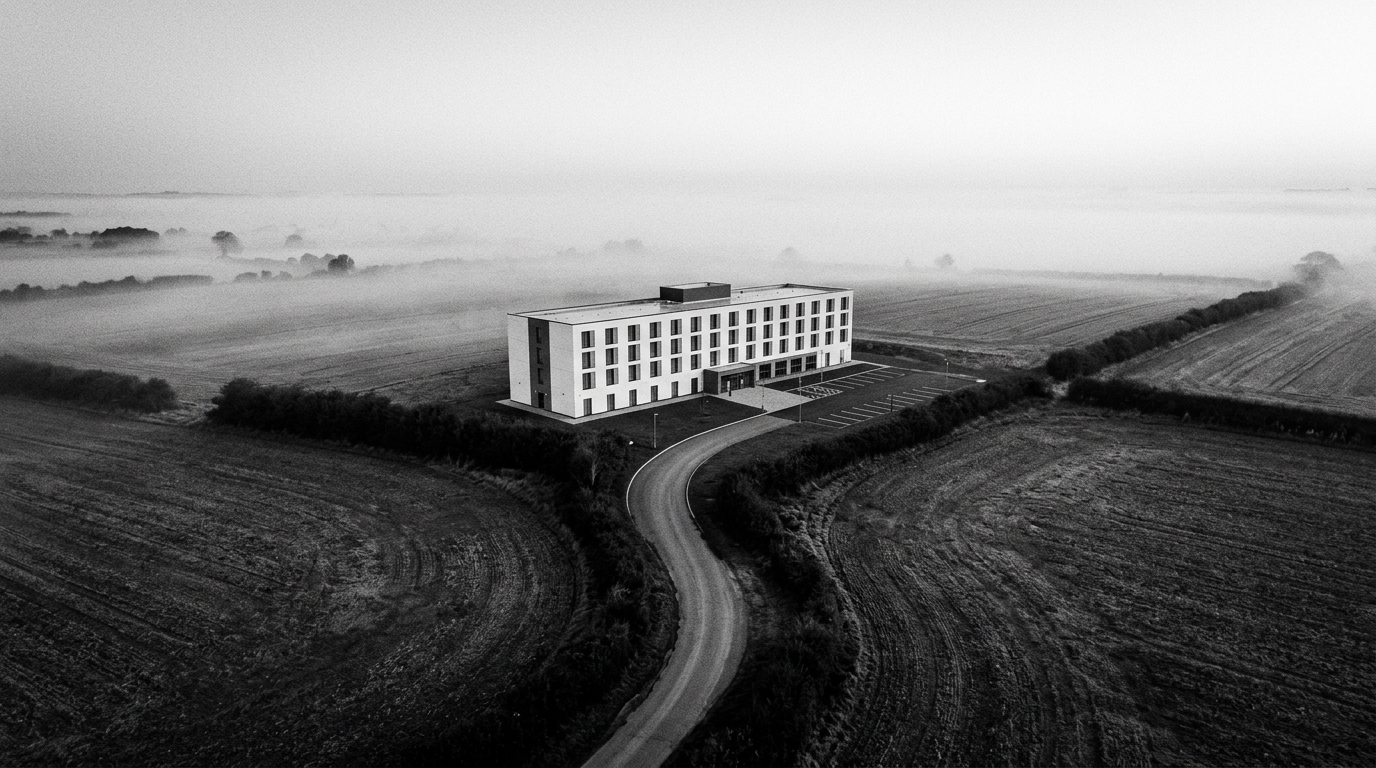
Let me set the scene for you because it's too good not to. Marriott's Fairfield brand... over 1,100 hotels, second-largest brand in the entire portfolio, a 30-year track record of reliable mid-scale performance across North America... is making its grand UK entrance. And where is the flag going up? Adjacent to the British Motor Museum in Gaydon, Warwickshire. A village. Population: small. The anchor tenants in the area are Jaguar Land Rover's R&D center and Aston Martin's headquarters. Construction started last month, 142 keys in phase one with another 98 possible if demand materializes, and the doors are supposed to open June 2027. This is either a quietly brilliant beachhead strategy or the most peculiar brand launch I've seen in years, and I've been watching brand launches long enough to know that "peculiar" and "brilliant" aren't mutually exclusive.

Here's what I keep coming back to. Fairfield works in the US because every road warrior, every family driving to a tournament, every corporate travel manager already knows exactly what they're getting. Clean room. Decent breakfast. No surprises. The brand promise is simplicity, and that promise has been reinforced by thousands of consistent stays across decades. You don't need to sell "Fairfield" to an American business traveler... the name does the work. In the UK? That name means absolutely nothing. Zero equity. Zero recognition. You're not launching a brand extension. You're launching a brand, period. And you're doing it in a location that depends almost entirely on event-driven demand from the museum's conference business and midweek corporate travelers from the automotive corridor. That's a narrow funnel for a brand that needs to introduce itself to an entire country. (I grew up watching my dad open properties in markets where nobody knew the flag. The first 18 months are brutal even when the location is obvious. When the location requires explanation, multiply that timeline.)

The strategic logic isn't insane, I'll give them that. South Warwickshire genuinely lacks internationally branded mid-scale product, and there's a real accommodation gap for multi-day conference delegates who currently scatter to hotels 20 minutes away. Cycas Hospitality is managing, and they know the European market. But let's talk about what this is actually asking the owner to do. You're building a 142-key new-construction hotel... not a conversion, not an adaptive reuse, a ground-up build... in a secondary UK market, under a flag with no local brand awareness, targeting a demand base that is heavily dependent on one venue's event calendar and a handful of automotive companies. The Marriott Bonvoy loyalty engine will do some work, absolutely. But loyalty contribution for a brand nobody's actively searching for, in a market nobody's browsing for on the app, is going to underperform whatever projection is sitting in the development file right now. I've read enough FDDs to know what those projections look like, and I've sat across from enough owners three years later to know what the actuals look like. The variance should keep people up at night.

What's really interesting is the timing. Marriott just launched Series by Marriott across Europe... a conversion-focused collection brand spanning midscale to upscale, with 11 signings already in the UK and Italy. They've announced plans to add nearly 100 properties and 12,000 rooms to their European portfolio through conversions and adaptive reuse by end of 2026. The entire European strategy is built around asset-light, conversion-heavy, low-risk expansion. And then here's Fairfield, going new-construction in a village. This isn't the playbook. This is the exception to the playbook, which means somebody at Marriott believes strongly enough in this specific site to greenlight a path that contradicts the broader strategy. That's either conviction based on data I haven't seen, or it's the kind of optimism that looks great in the development presentation and gets very quiet two years post-opening.

I want this to work. I genuinely do. Because if Fairfield can establish itself in the UK, it opens a massive runway for the brand across secondary European markets that are underserved by consistent, internationally branded mid-scale product. The demand is real. But a brand is a promise, and a promise only works when the person hearing it already trusts the source. Marriott is the source. Fairfield is the promise. And in the UK right now, nobody knows what that promise means. The museum location gives them a captive audience for the first year or two. The question is what happens after that... when the brand has to stand on its own name, in a market that has plenty of perfectly adequate three-star hotels already, and convince a British traveler that "Fairfield" means something worth choosing. That's not a hotel problem. That's a brand problem. And it's the kind of problem that takes years and millions of dollars to solve, if it gets solved at all.

Operator's Take

Here's who should be paying attention to this. If you're an independent or locally branded operator in a UK secondary market... particularly one near conference venues or corporate campuses... Marriott just told you where they're headed next. Fairfield is their volume play, and this is the test case. You've got a window right now, probably 18-24 months before this property opens and longer before the brand builds any real awareness, to lock in your corporate accounts and strengthen your direct relationships with the event venues feeding you business. Don't wait for the flag to go up to start competing with it. The Bonvoy engine is coming for your demand, and the only defense is a guest relationship the loyalty program can't replicate. If you're an owner being pitched a Fairfield conversion in the UK after this opens... ask for actuals from this property before you sign anything. Not projections. Actuals. And if they can't give them to you yet, that tells you everything about the timeline of your decision.
— Mike Storm, Founder & Editor
Read full analysis → ← Show less
Source: Google News: Marriott
Marriott's First UK Fairfield Is Opening Next to a Car Museum. That's Not the Story.

Marriott's First UK Fairfield Is Opening Next to a Car Museum. That's Not the Story.

A 142-key Fairfield is about to plant the flag for Marriott's midscale push into the UK, anchored by Jaguar Land Rover and Aston Martin headquarters demand. The real question is whether the playbook that works in American secondary markets translates to a country that doesn't know what Fairfield is.

Available Analysis

I've seen this movie before. Different country, same script.

A brand that dominates a segment in the US looks at a map, finds a market with corporate demand generators and limited branded supply, and says "we should be there." And on paper, it always makes sense. Jaguar Land Rover's global HQ is right there. Aston Martin's world headquarters is down the road. There's a museum that hosts conferences and events and currently has nowhere quality to put overnight delegates. The demand story writes itself. A 142-key select-service with a potential Phase 2 of 98 more rooms... that's a bet on sustained corporate and event travel in a part of Warwickshire that doesn't have an internationally branded option right now.

Here's what I'm actually watching. Fairfield has zero brand recognition in the UK. None. In the States, every road warrior knows what Fairfield means... clean, consistent, no surprises, reasonable rate. That brand equity took decades to build. In England, you're starting from scratch. The property has to do what every new-market Fairfield has to do: earn every booking on the merits until Marriott Bonvoy members start defaulting to it. Cycas Hospitality is running it, and they know European operations, so that's the right call. But the ramp-up period for a brand nobody in the market recognizes is longer and more expensive than anyone puts in the pro forma. I managed a property once that was the first of its flag in the market. Corporate told us the brand would "pull" guests. What actually happened is we spent the first 18 months educating every travel manager and event planner within 50 miles about what we were. That's not a marketing expense that shows up in the FDD projections.

The other thing nobody's talking about... this is a charity-owned site. The British Motor Museum is a registered charitable trust. They need this hotel to drive footfall, generate revenue, and fund their mission. That's a different ownership dynamic than a standard development deal. The independent owner (Warwickshire Hotel Development Limited) controls the asset, but the site relationship means both parties need the hotel to perform. When two entities with different objectives are tied to the same property's success, alignment matters more than the flag on the building. I've watched deals like this work beautifully when everyone's pulling the same direction, and I've watched them go sideways when the anchor tenant's priorities drift from the hotel operator's.

Marriott reported a record pipeline of 610,000 rooms globally at the end of 2025, with "meaningful acceleration in midscale" as a stated priority. This is one brick in that wall. For Marriott, it's a low-risk way to test Fairfield in the UK market with someone else's capital and a third-party operator absorbing the execution risk. For the owner, the math has to work on Gaydon-area corporate demand, museum event traffic, and whatever leisure travel the Warwickshire countryside generates. Phase 2 (the additional 98 keys) is "subject to demand," which is developer-speak for "let's see if Phase 1 fills up before we commit another round of capital." That's actually the smart way to do it. Build what the market can absorb today. Prove it. Then expand.

The real test comes in June 2027 when this thing opens and has to answer the only question that matters: can a brand that means something in Topeka and Tallahassee mean something in the English Midlands? Marriott's betting yes. The owner's betting yes with their own money. I'd give it better than even odds, but only because the demand generators are real and the management company knows the territory. If those two things weren't true, this would be a flag-planting exercise with a long, expensive ramp-up and no safety net.

Operator's Take

If you're a GM or operator working for a brand that's expanding into new international markets, pay attention to what's happening here. The playbook is always the same: find the demand gap, plant the flag, assume the brand will pull. It won't. Not for the first 12-18 months. You will earn every booking through direct sales, local relationship-building, and event planner education. Build your pre-opening staffing plan and marketing budget around that reality, not the brand's rosy projections. And if you're an independent owner in a secondary UK market watching Marriott move midscale into your backyard... this is what I call the Brand Reality Gap. They're selling the Bonvoy engine to developers while your local corporate accounts have never heard of Fairfield. Your window to lock in those accounts with competitive rates and personal service is right now, before that flag goes up. Use it.

Read full analysis → ← Show less
Source: Google News: Marriott
Plymouth's Hilton Math: Two Projects, One Confirmed, One Still a Hole in the Ground

Plymouth's Hilton Math: Two Projects, One Confirmed, One Still a Hole in the Ground

Hilton just signed a 120-key Tapestry Collection conversion in Plymouth while the city's long-promised Hilton Garden Inn site sits empty after the council terminated its developer. The per-key economics of these two deals tell very different stories about what "Hilton coming to town" actually means.

Plymouth now has two Hilton-branded projects on paper. One is real. One is a decade-old aspiration with a freshly terminated developer contract and a council planning to "remarket" the site in May. The real number worth examining: the city bought the old Quality Hotel site in January 2016 and demolished it that same year. Ten years of carrying cost on a cleared lot with zero revenue. Whatever the acquisition price was, the true cost to Plymouth taxpayers now includes a decade of opportunity cost, site maintenance, and at least two failed development cycles.

The confirmed deal is the New Continental Hotel, an 1865-era property converting to Tapestry Collection by Hilton with 120 rooms and a Spring 2027 opening. This is textbook Hilton conversion strategy. Their Q4 2025 earnings showed conversions comprising roughly 40% of room openings globally, with a record pipeline exceeding 520,000 rooms. Tapestry exists specifically for this... heritage buildings with character that don't fit a standard-brand prototype. The buyer, Elevate Hotels Plymouth Ltd, gets Hilton's distribution engine on an existing asset. No ground-up construction risk. No 10-year entitlement process. The math on conversions is structurally faster than new builds, which is precisely why Hilton is leaning into them.

The old Quality Hotel site is the opposite story. Propiteer Hotels Limited was named preferred developer in 2022, proposing a 150-key Hilton Garden Inn plus 142 residential apartments. Propiteer's holding company, Never What if Group Ltd, entered liquidation in 2024 carrying approximately £9.8 million in debts. The council terminated the contract on March 6, 2026, citing unmet obligations. Councillor Lowry says there are "over a dozen new expressions of interest." Expressions of interest are not letters of intent. Letters of intent are not contracts (I will never stop saying this). And contracts, as Plymouth just learned, are not completions.

Here's what the headline doesn't tell you. The confirmed Tapestry deal actually makes the Garden Inn site harder to develop, not easier. A 120-key upscale conversion absorbs some of the unmet demand that justified the Garden Inn's projections. Any new developer running a feasibility study on the Quality Hotel site now has to model against a Hilton-branded competitor that didn't exist when Propiteer's numbers were built. The demand gap Plymouth keeps citing... the shortage of four-star-and-above rooms... is about to narrow by 120 keys. The 150-key Garden Inn pro forma needs to be rebuilt from scratch with that absorption factored in.

The council says the market has experienced "a recent uplift." Maybe. But the math on that site now includes: acquisition cost plus 10 years of carry, demolition expense, two failed developer cycles, and a new branded competitor opening 18 months before any replacement project could break ground. Whatever a developer bids for this site, the council's basis is already underwater. The question isn't whether Plymouth needs more hotel rooms. It's whether the returns on this specific site, with this specific cost history, pencil for anyone who actually has to write the check.

Operator's Take

Here's what I'd tell any owner or developer looking at secondary UK markets right now. When a council tells you they've had "a dozen expressions of interest" on a site that's been empty for a decade with a bankrupt developer in the rearview mirror... that's not demand. That's a dating profile. This is what I call the Brand Reality Gap... Hilton's name on a press release and Hilton's flag on an operating hotel are two completely different things, and Plymouth just learned that lesson the expensive way. If you're being pitched a site with a municipal partner, get the full cost basis including carry time, and stress-test the pro forma against every pipeline project within 10 miles. The confirmed Tapestry conversion is the real story here. The Garden Inn site is still just a story.

— Mike Storm, Founder & Editor
Read full analysis → ← Show less
Source: Google News: Hilton
End of Stories