Today · Jun 19, 2026
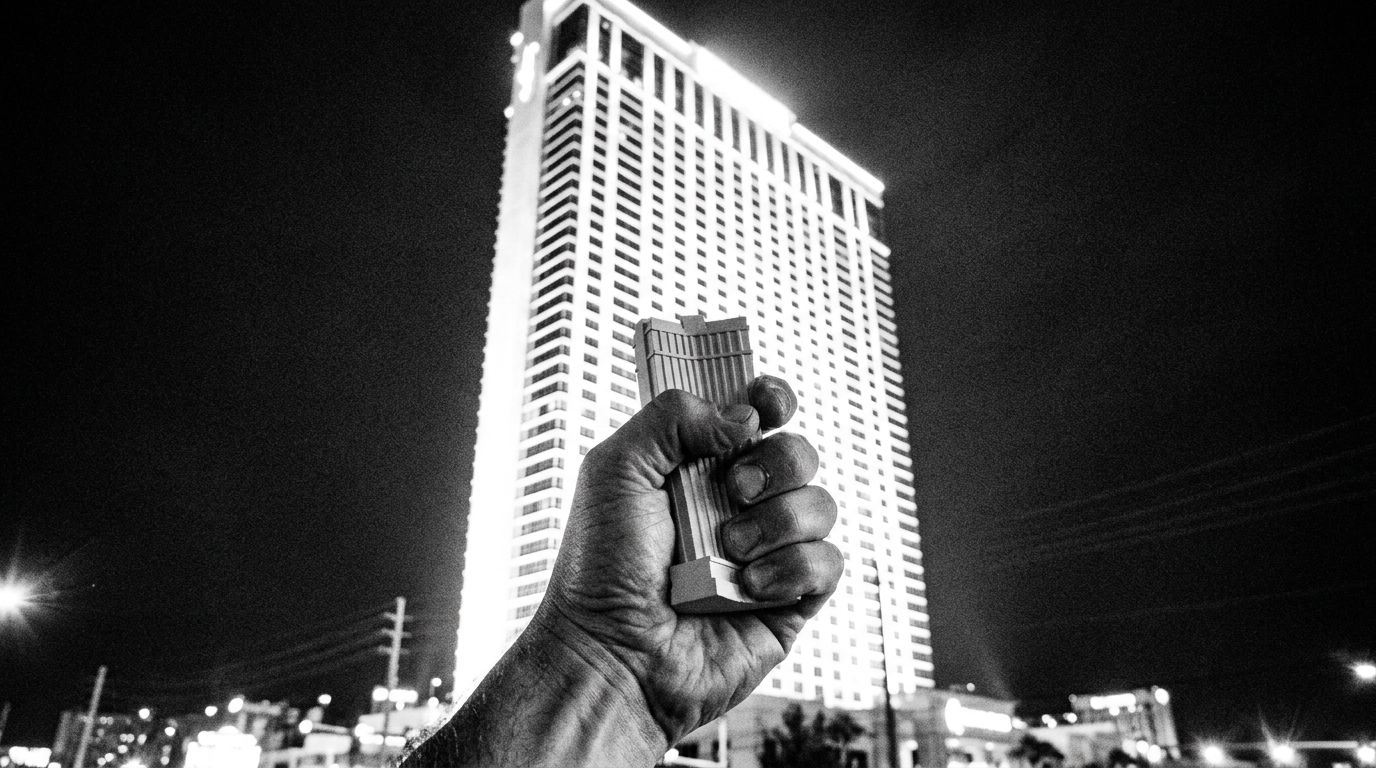
Barry Diller Wants to Take MGM Private at $48.30. The Stock Says He's Lowballing.

Barry Diller Wants to Take MGM Private at $48.30. The Stock Says He's Lowballing.

Diller's People Inc. bid values MGM at $18 billion while insiders are already heading for the exits. When the stock trades above your offer price and an analyst downgrades you to Hold because the deal math doesn't pencil, that's the market telling you something you should already know.

Available Analysis

I watched a casino resort get sold once where the acquiring group came in with a number that was technically a premium to where the stock had been trading. Everybody at the property thought it was a done deal. The GM started updating his resume. The F&B director was already calling friends at other properties. Six weeks later, the board rejected it, a revised offer came in 18% higher, and the whole thing dragged on for another nine months. Meanwhile, nobody at property level could get a capital project approved because nobody knew who was going to own the building next quarter.

That's where MGM sits right now. And if you work at one of their properties... or compete against one... you should be paying attention to the mechanics, not the headlines.

Here's what's actually happening. Barry Diller's People Inc. (which already owns 26.1% of MGM) put a non-binding offer on the table at $48.30 per share. That's roughly $18 billion for the whole company. Sounds like a big number. It is a big number. But MGM's stock is already trading above $48.30, which means the market has looked at Diller's bid and said "thanks, but you're going to need to come higher." Stifel downgraded MGM from Buy to Hold... not because they think the deal is bad, but because they think the offer price doesn't reflect what MGM is actually worth. When analysts downgrade you because your suitor isn't paying enough, that tells you exactly where this is headed. This bid is an opening move, not a closing one.

Meanwhile, Pansy Ho (chairperson of MGM China) sold every share she owned in MGM Resorts... 3.06 million shares, roughly $140 million... between late May and early June. Right before the bid went public. Now, she's been reducing her position for years, and her exit aligns with a broader strategy of pulling back from non-core international holdings. But the timing is the timing. When a board-level insider with deep ties to your Asia-Pacific operations cashes out completely while a take-private bid is sitting on the table, it raises a question that nobody at MGM is going to answer publicly: does she know something about the board's appetite for this deal, or is she simply done? Either way, the signal to the market is not confidence in the current offer price.

The bigger picture here is what a take-private MGM means for the competitive landscape. This bid is happening weeks after Fertitta Entertainment's $17.6 billion deal for Caesars. Two of the biggest gaming and hospitality companies in the country potentially going private in the same quarter. Think about what that means. Public companies have to report quarterly, justify capital allocation to shareholders, and manage stock price expectations. Private companies don't. A private MGM could pour money into the $10 billion Osaka integrated resort, push harder on BetMGM's goal of 20-25% North American sports betting market share, and make long-horizon bets on Dubai without worrying about whether Wall Street likes the next earnings call. That's the real argument Diller is making... not that MGM is broken, but that the public market structure is preventing it from running the way it should. Whether you agree with that or not, if he's right and he pulls it off, MGM becomes a very different competitor. More patient capital. Longer time horizons. Bigger swings.

For the operators in the room, here's what matters. Uncertainty kills capital spending. Every property-level project at an MGM hotel or casino that requires ownership approval just got harder to push through. Renovations, system upgrades, staffing investments... all of it enters a holding pattern until the board either accepts a (likely higher) offer or rejects the bid entirely. I've seen this movie before. The deal timeline stretches, the properties drift, and the people on the ground are the ones who feel it. If you're competing against an MGM property in your market, that drift might be your window. If you're inside MGM's orbit, buckle in. This is going to take a while.

Operator's Take

If you're a GM or director-level operator at an MGM property, do two things this week. First, get every capital request you've been sitting on submitted and documented now... before the approval pipeline freezes completely. Once the board is consumed with evaluating this bid (and whatever revised bid follows), discretionary spending decisions will slow to a crawl. Second, if you compete against an MGM property in your comp set, watch their rate strategy closely over the next 60-90 days. Ownership uncertainty creates hesitation, and hesitation shows up in inconsistent pricing and deferred property improvements. That's not a reason to slash rates and grab share... that's a reason to hold your rate, invest in your product, and let the other guy's uncertainty become your advantage. This is what I call the False Profit Filter in reverse... their deferred investment today is your opportunity to build real asset value in yours.

Read full analysis → ← Show less
Source: Google News: MGM Resorts
Hotel REITs Trading 33.5% Below NAV. The Take-Private Math Is Getting Loud.

Hotel REITs Trading 33.5% Below NAV. The Take-Private Math Is Getting Loud.

Public hotel REITs are priced like distressed assets while private buyers are paying full freight for the same buildings. That gap is either the market being irrational or a massive arbitrage window that's about to close.

Available Analysis

A 33.5% median discount to NAV across U.S. hotel REITs as of January 2026. Let's decompose that. If a REIT owns a portfolio appraised at $3 billion in the private market, the public market is pricing the equity as if those assets are worth roughly $2 billion. The buildings didn't get worse. The rooms are still selling. The gap is pure market structure... public investors pricing in cyclicality risk, cost pressure, and CapEx drag that private buyers either don't fear or believe they can manage better.

The evidence is already in the transaction data. U.S. hotel investment volume hit $24 billion in 2025, up 17.5% year-over-year. Private capital drove a significant share of that. Debt markets have cooperated... borrowing costs dropped roughly 300 basis points since September 2024. So you have a buyer pool with cheaper financing looking at public vehicles trading at a 30-40% discount to replacement cost. The math on a take-private isn't complicated. Buy the REIT at market price, capture the NAV spread, operate with a longer time horizon and more leverage than public markets allow. We saw this exact structure with a well-known lifestyle trust acquired for roughly $365,000 per key in late 2023... a 60% premium to the pre-announcement share price that was still a discount to private market comps. The seller's shareholders celebrated. The buyer got institutional-quality assets below replacement cost. Everyone won except the public market that had been mispricing the company for two years.

The list of candidates is not subtle. At least five public hotel REITs are trading at discounts exceeding 40% to NAV. Two have already formed special committees to "explore strategic alternatives," which is board-speak for "we're running a sale process and we'd like to pretend we haven't decided yet." I've audited enough of these structures to know what a special committee announcement actually means. It means someone credible has already called. The committee formalizes the process and gives the board legal cover to negotiate. The outcome is usually binary: a deal closes at a 25-50% premium, or the committee quietly dissolves and nobody talks about it again.

Here's what the headline doesn't tell you. Not every take-private creates value. The discount to NAV is real, but so are the reasons behind it. Operating costs are growing faster than revenue. CapEx needs are enormous (deferred maintenance doesn't disappear when ownership changes... it just moves to a different balance sheet). And the hotel business lacks the contractual cash flow protection that makes other real estate sectors more predictable. A private buyer paying a 40% premium to acquire a REIT still needs RevPAR growth, margin improvement, or asset sales to generate returns. If the cycle turns before the value-creation plan executes, that leverage genius becomes a liability. I've seen this play out at three different portfolios. The entry price looked brilliant. The exit was a different story.

The real number to watch isn't the NAV discount. It's the implied cap rate on these take-private bids relative to the buyer's cost of capital. Average hotel cap rates have risen to roughly 8%. If a private buyer is financing at 6.5% after the recent rate compression, the spread is thin. That means the underwriting depends heavily on NOI growth assumptions, not current yield. And NOI growth assumptions in a market with rising labor costs and flat ADR growth in many segments require a level of optimism that should make anyone who's been through a cycle pause. The math works. The question is what "works" means when you stress-test it against a 15% revenue decline.

Operator's Take

Here's what I'd tell you. If you're a GM or asset manager at a property owned by a publicly traded hotel REIT, pick up the phone and call your regional VP this week. Ask directly: is the company exploring strategic alternatives? Because if your REIT is trading at a 40%+ discount to NAV, someone is doing the math on a take-private right now... and new ownership means new management, new CapEx priorities, and potentially new operators. Don't be the last person in the building to find out. Get ahead of it. Start documenting your property's performance story now, because when the new owners show up, they're going to ask what every dollar is doing. Have the answer ready.

— Mike Storm, Founder & Editor
Read full analysis → ← Show less
Source: Google News: Hotel REIT
End of Stories