Memphis Spent $22M on a 590-Room Hotel. The Renovation Will Cost 11 Times That. Let's Talk About Why.
The city of Memphis bought the Sheraton Downtown for $22 million, rebranded it the Memphis Riverline Hotel, and now faces a $250 million renovation bill to make it match the convention center next door. The real story isn't the price tag... it's what happens to every owner who inherits decades of someone else's deferred maintenance.
I grew up watching my dad take over hotels that the previous operator had starved. You'd walk the property with the asset report in one hand and a flashlight in the other, and within about forty minutes you'd know exactly how many years of "savings" you were about to pay for. The lobby looked fine. The back of house told the truth. Memphis just learned that lesson at scale, and the tuition is $250 million.
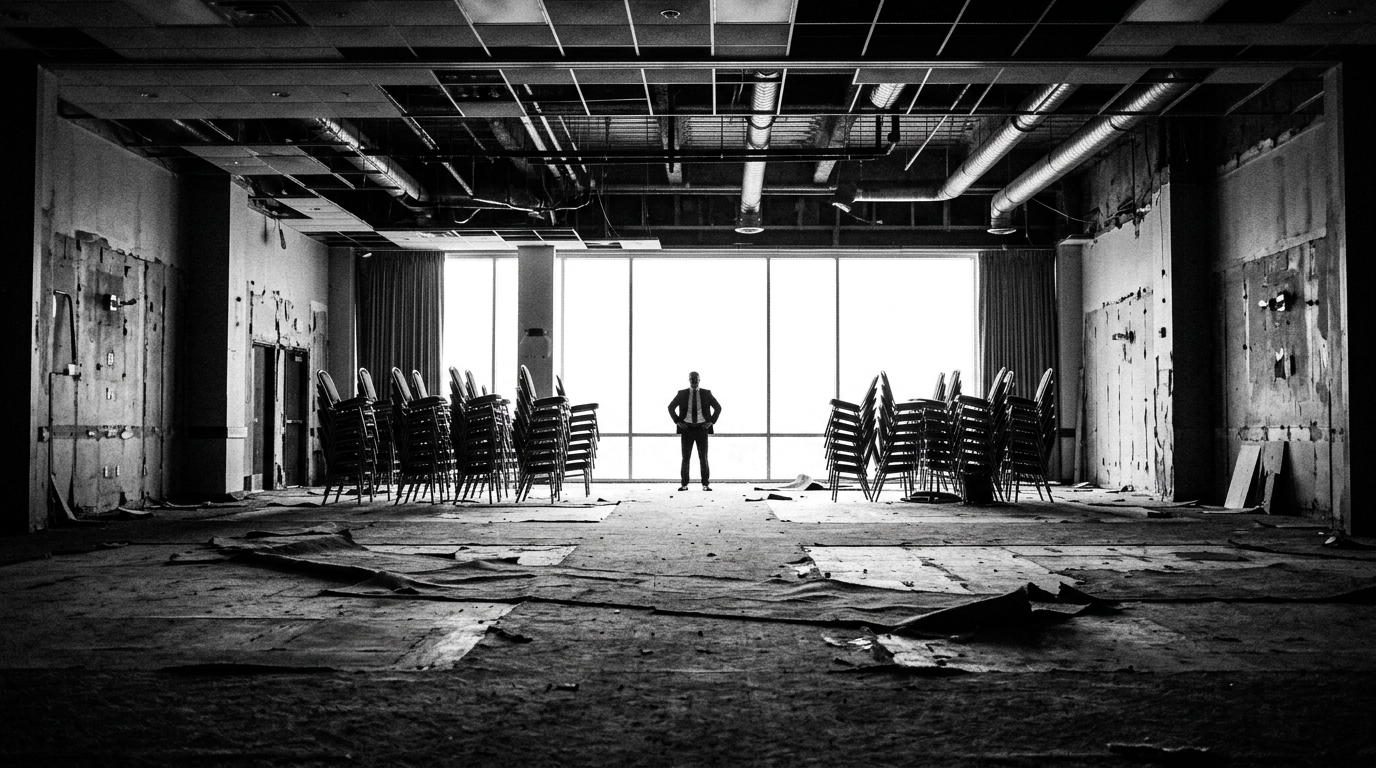
Here's what happened. The City of Memphis bought the 590-room Sheraton Downtown for $22 million in November 2025 because the property had deteriorated so badly it was dragging down the $200 million convention center renovation happening next door. That's roughly $37,300 per key for a hotel that city officials themselves described as being in "substandard condition" and a "state of disrepair." So the acquisition price wasn't a deal... it was an admission of how far gone the asset was. Now the renovation estimate sits at $250 million, which works out to about $423,700 per key in renovation cost alone. Add the purchase price and you're at $461,000 per key all-in for a hotel that won't be finished until Q1 2029. They've rebranded it the "Memphis Riverline Hotel," operating under an independent flag while staying "associated with" Marriott, which is corporate language for "the brand standards aren't met and everyone knows it, but we're keeping the reservation pipe open while we figure this out." The 12-month design phase followed by years of construction means this hotel will be under some form of disruption for the better part of three years. Guests during that period are going to feel it. Staff are going to feel it. And the convention center next door, the entire reason this purchase happened, is going to feel it every time a meeting planner asks "so where are my attendees sleeping?"
The math is what gets me. $461,000 per key all-in for an upper-upscale convention hotel in Memphis. For context, new-build select-service hotels in secondary markets are coming in at $150,000-$200,000 per key. Full-service new builds in comparable markets run $300,000-$400,000. Memphis is spending new-build-plus money to fix someone else's mess, and they're doing it because the alternative (letting the city's largest hotel continue to deteriorate next to a brand-new convention center) was worse. That's the thing about deferred maintenance. The cost doesn't disappear. It compounds. And eventually someone pays... either the current owner pays for the fix, or the next owner pays more for the fix plus the opportunity cost of years of decline. Memphis is the next owner, and the bill just came due.
What's interesting about the structure is who's actually holding the risk. The city owns it. A nonprofit subsidiary of the Downtown Memphis Commission holds and oversees it. Carlisle Development Group is running the renovation. And Marriott is hovering in the background with what amounts to a conditional relationship... if the renovation meets brand standards, this could become a full Marriott-branded property again. Could. That's a lot of "if" for $250 million. The city is bearing all the capital risk while Marriott gets to decide later whether the finished product is good enough for their flag. I've sat in rooms where that dynamic plays out, and the entity holding the checkbook and the entity holding the brand standards are almost never aligned on what "good enough" means. The brand always wants more. The owner always wants to know when "more" stops. And the answer, in my experience, is that it stops when the money runs out or the owner finally says no, whichever comes first.
The Memphis hotel market is actually showing some life right now... occupancy grew 2.7% year-over-year in 2025, and recent weekly data shows strong RevPAR gains partly driven by AI data center demand (which is a sentence I never expected to write about Memphis, but here we are). That's actually good news for the Riverline during its transition period. Convention-dependent hotels live and die by the market's ability to backfill when the big groups aren't in house, and a market with rising demand gives you a cushion. But three years is a long time to operate a 590-room hotel in renovation mode. The property has 14,000 square feet of meeting space of its own plus the skywalk to 300,000 square feet at the convention center next door. If even a quarter of that meeting space goes offline during construction phases, the revenue impact compounds fast. And every month that the guest experience is compromised by construction noise, closed amenities, or detour signs in the hallway is a month where the online reviews are telling a story that takes years to undo.
Here's the number that should keep you up at night. $37,300 per key to acquire. $423,700 per key to fix. That's the CapEx Cliff... deferred maintenance doesn't stay deferred. It compounds. Quietly. Until it doesn't. If you're sitting on a property where the lobby looks fine and the back of house tells a different story... you already know where this goes. Pull your 5-year CapEx forecast. Not the version that makes the hold period look good. The real one. What does it cost to fix it now? What does it cost after three years of declining reviews and a convention bureau that's stopped recommending you? That gap is the cliff. Memphis fell off it. The bill was $250 million. Yours won't be that. But it'll be more than it is today, and it gets more expensive every quarter you wait.