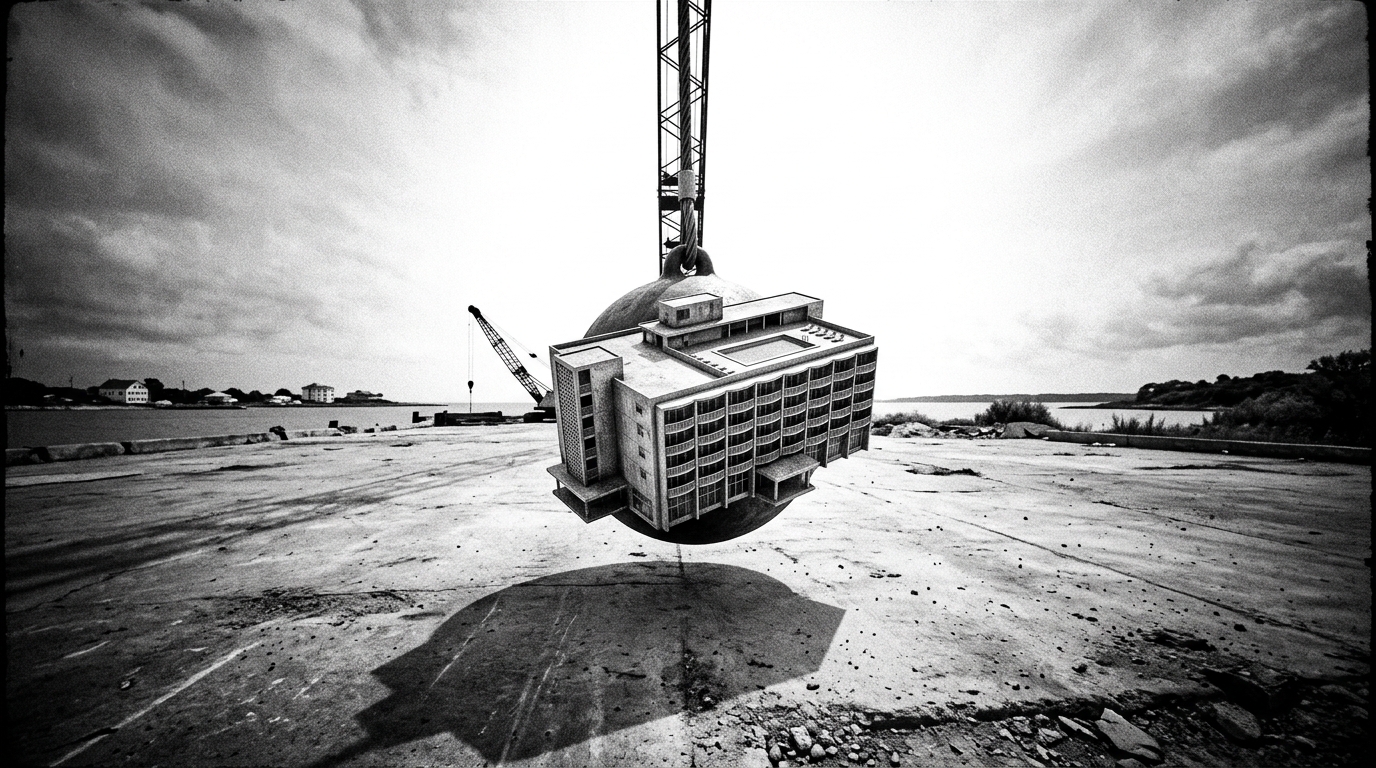
A Developer Just Paid $96M for a Hotel They're Almost Certainly Going to Demolish
Kolter Group is buying the 333-key Hilton St. Petersburg Bayfront from Ashford Hospitality Trust. They're not buying a hotel. They're buying three acres of waterfront dirt with high-density zoning and a 54-year-old building standing in the way.
Let me save you some time. This isn't a hotel transaction. This is a land play wearing a hotel costume. Kolter Group... the same outfit that already turned an adjacent parking lot they bought from the same seller into a 35-story luxury residential tower... is paying $96 million cash for a 333-room Hilton that was built in 1972 and last renovated over a decade ago. That works out to roughly $288,000 per key, which would be a stretch for a select-service in that market, let alone a 54-year-old full-service property that needs... well, everything. But Kolter isn't buying keys. They're buying a three-acre waterfront site with DC-1 zoning that lets them go vertical. The hotel is just what happens to be sitting on it.
I've seen this exact scenario play out maybe a dozen times over 40 years. A hotel reaches a certain age where the PIP math becomes punishing, the land value exceeds the going-concern value, and someone with deeper pockets and a different vision shows up. The building stops being an asset and starts being a placeholder. Ashford originally acquired this property back in 2004 as part of a 21-hotel portfolio deal valued at $250 million. Twenty-two years later they're selling one hotel for $96 million. On paper that looks like a win. In practice... Ashford has been under pressure for years, selling assets to service debt and clean up a balance sheet that's been ugly since the pandemic. This isn't a strategic disposition. This is triage.
Here's the part that should make every hotel operator in a coastal Florida market sit up. St. Pete's hotel fundamentals are actually strong... RevPAR hit all-time highs recently, occupancy running in the low 70s, ADR pushing past $170. The market isn't weak. But when a developer looks at three acres of waterfront and calculates what luxury condos sell for per square foot versus what hotel rooms generate per occupied night, the hotel loses that math every single time. Good hotel markets with appreciating land values are where hotels are most vulnerable to conversion. That's not intuitive. Most people think weak markets kill hotels. Sometimes it's the strong markets that do it... because the dirt becomes worth more than the operation.
What about the 333 employees who work there? What about the 47,000 square feet of meeting space that local businesses use? What about the guests who've been staying at that property for decades? Those questions don't show up in the transaction press release. They never do. I talked to a GM years ago whose property got sold to a residential developer. He found out the same day the staff did. Twenty-two years of combined tenure on his leadership team. Gone in 90 days. He told me, "The building was worth more dead than alive. I just wish someone had told me that before I spent two years fighting for a renovation budget." That's the brutal economics of waterfront hospitality real estate in 2026.
Kolter hasn't announced specific plans yet, and they won't until they have to. But the pattern is unmistakable. They buy strategic sites. They build towers. They already proved the model on the lot next door. The only question is whether the Hilton flag stays in some form (ground-floor hotel component in a mixed-use tower) or disappears entirely. If I'm betting... and I am... that flag is gone within 18 months of closing.
If you're running a full-service hotel on valuable urban land, especially waterfront, and your building is north of 40 years old, understand something clearly: your ownership group is looking at your asset two ways right now, and only one of them involves you keeping your job. This is what I call the CapEx Cliff... when the cost to renovate exceeds the incremental value of the renovation, the building's highest and best use changes, and it changes fast. Talk to your asset manager now. Find out where you stand. If there's a PIP coming and ownership is going quiet on approval, that silence is telling you something. Don't be the last one to figure it out.