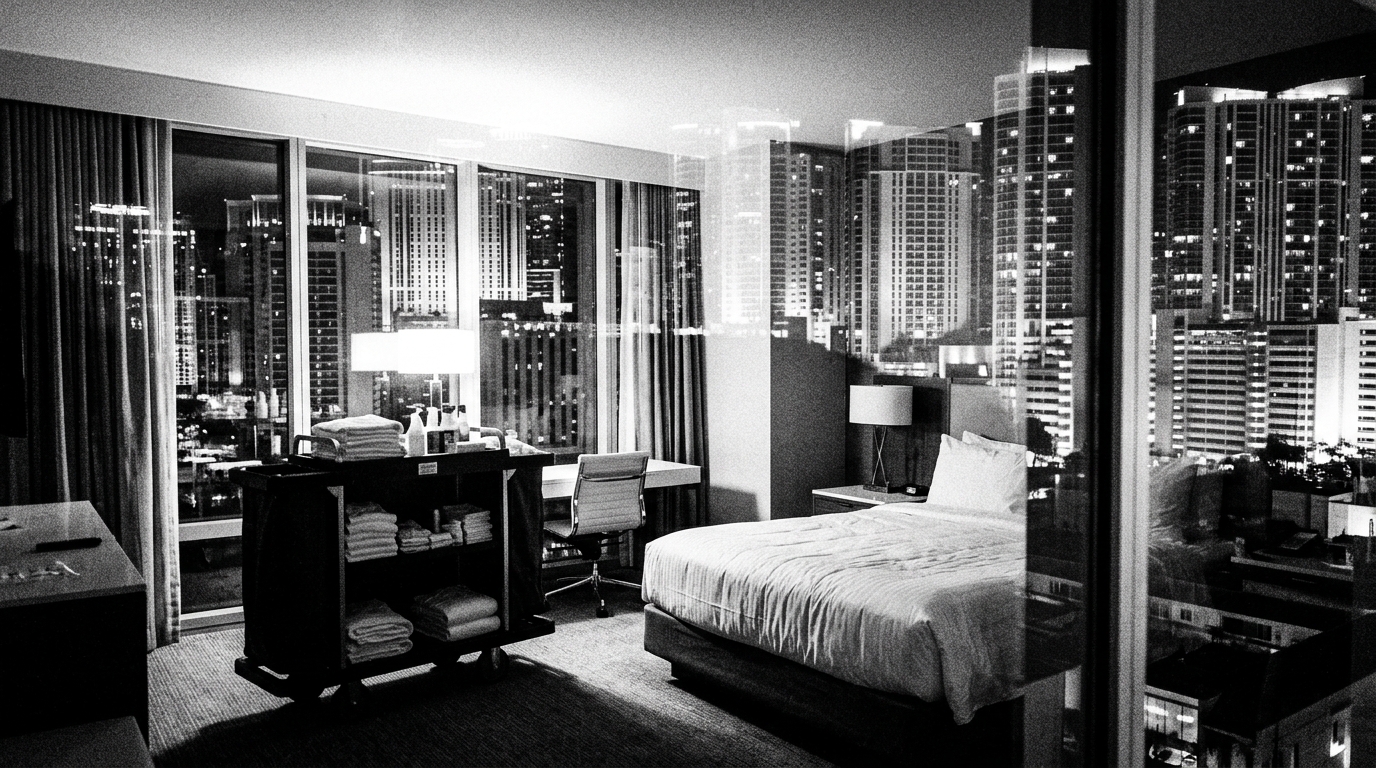
A $13 Million Renovation Wrapped in a Puff Piece. Let's Talk About What's Actually Happening in Lake Buena Vista.
Embassy Suites Lake Buena Vista just finished a major renovation and got a glowing promo article to show for it. What's worth paying attention to is what the refresh tells you about the brutal math of competing in Orlando's most contested zip code.
I've been in this business long enough to recognize a planted story when I see one. A Disney fan site publishes a piece about how wonderful it is to stay at a specific Embassy Suites property near the parks, complete with amenity descriptions that read like someone copied them off the hotel's own website. That's not journalism. That's marketing with someone else's byline. And normally I'd scroll right past it.
But here's why I didn't. There's a 334-key all-suites property sitting in one of the most competitive leisure corridors in North America that just finished a multi-phase renovation... new suites, new lobby, new pool deck, the works. The ownership group that bought this place back in 2014 spent $13 million on it then, and they've clearly gone back to the well for another significant capital injection. In a market where Universal's Epic Universe opened last May and sucked a meaningful chunk of tourist attention (and wallet share) to the other side of town, the question isn't whether the renovated rooms look nice. The question is whether the investment pencils out when the competitive landscape just got materially harder.
Orlando is a market that punishes complacency. You've got roughly 130,000 hotel rooms in the metro, demand drivers that shift every time a new attraction opens, and a guest base that is overwhelmingly leisure and therefore overwhelmingly rate-sensitive. Hilton is projecting 1% to 2% system-wide RevPAR growth for 2026. That's the national number. In Orlando, with new supply still absorbing and Epic Universe redistributing visitor patterns, the property-level reality for a hotel that's a 10-minute drive from Disney Springs is going to depend entirely on whether that renovation actually moves the needle on ADR or just keeps you from losing share. I knew an owner once who told me after a renovation, "I didn't spend $4 million to get back to where I was. But that's exactly what happened." He wasn't wrong. He was just late. The comp set had already moved while he was still hanging drywall.
Here's what I think about when I see a story like this. Embassy Suites is a strong brand in the family leisure segment. Two-room suites, complimentary breakfast, evening reception... the value proposition is clear and it resonates with the Disney crowd. But "strong brand in the right segment" doesn't mean the owner is making money. You've got franchise fees, loyalty assessments, the marketing fund contribution, brand-mandated vendors, and the cost of a full-service breakfast program that's gotten significantly more expensive in the last three years. When you layer a major renovation on top of that fee structure, the owner needs meaningful rate lift... not 3-5%. More like 10-15% sustained ADR improvement over the pre-renovation baseline to make the capital work. In a market where some analysts are already flagging moderating growth for Florida hospitality through the rest of 2026, that's not a layup. That's a jump shot with a hand in your face.
The planted article is doing what planted articles do... generating awareness, seeding the algorithm, trying to capture some of that summer booking intent. Fine. That's the game. But if you're an owner or an asset manager looking at a similar investment in a high-competition leisure market, the thing that matters isn't the puff piece. It's the trailing 12 months of actual performance after the renovation dust settles. Because the renovation is done. The hard part just started.
If you're an owner or asset manager sitting on a recently renovated property in a major leisure market, here's what I need you to do. Pull your pre-renovation ADR, your construction-period ADR (yes, the ugly number), and your post-renovation ADR by month for the last six months. Then calculate your actual rate lift as a percentage. If it's under 10% and you spent more than $20K per key on the renovation, your payback period just stretched past your franchise agreement horizon... and that should change how you think about every capital dollar from here forward. Don't wait for someone to tell you the renovation "worked." Define what "worked" means in dollars before the next owner's meeting, and bring that number yourself. This is what I call the Renovation Reality Multiplier... the disruption timeline and the recovery timeline are almost never what the pro forma promised. Build your expectations around reality, not the rendering.
