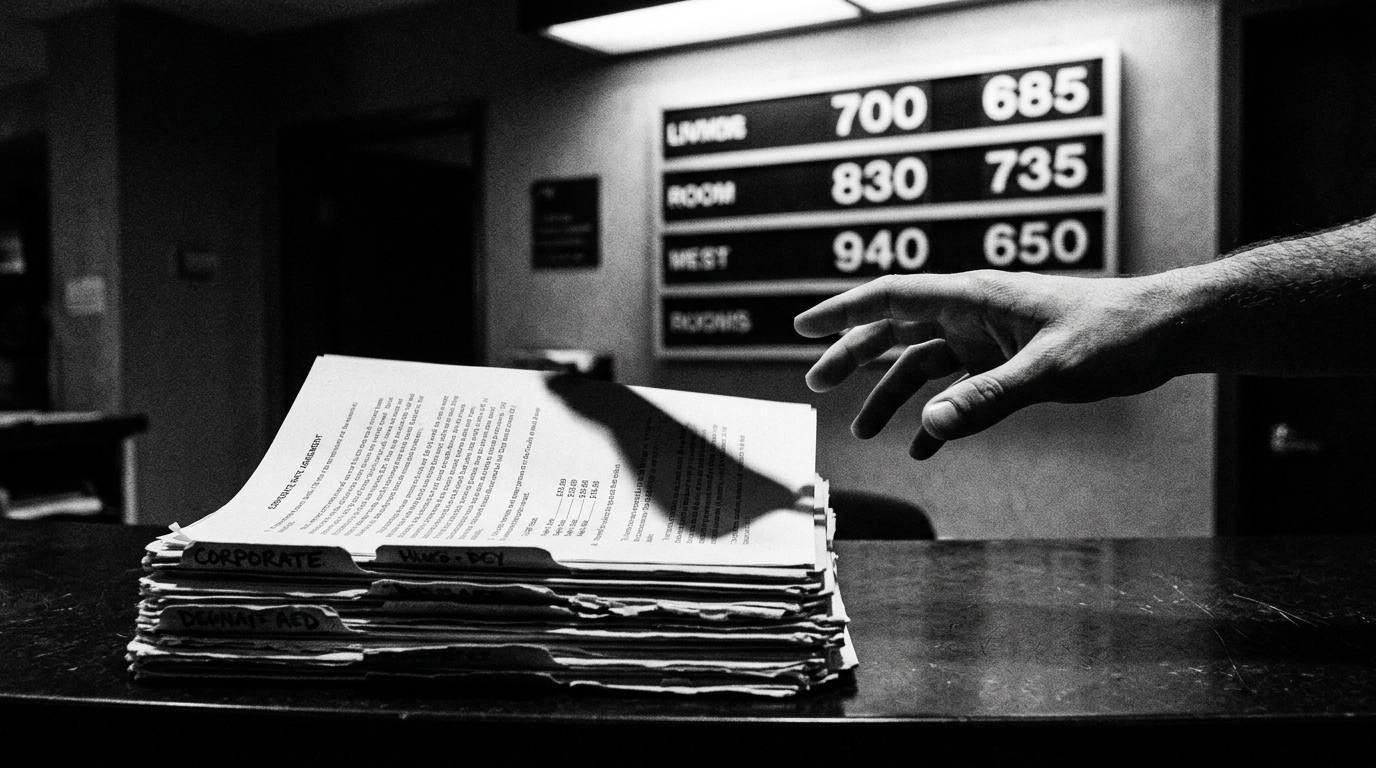
Your Corporate Rates Are Probably Too Low. Here's How I Know.
Business travel spending has blown past 2019 levels in raw dollars, and every headline is celebrating. But buried in the data is a reality that should have every DOS in the country pulling up their rate agreements this week.
I sat across from a director of sales about six months ago who was genuinely proud of her corporate account retention through the pandemic. "We kept every single one," she told me. "Not one account lost." I asked her what rate she kept them at. She got quiet. Then she said, "We haven't renegotiated since 2021." She had 47 corporate accounts, most of them locked in at rates that made sense when occupancy was running 52% and the world was falling apart. Occupancy's not running 52% anymore. And those rates are bleeding her dry.
Here's the number that matters. Global business travel hit $1.47 trillion in 2024 and is projected to reach somewhere between $1.57 and $1.69 trillion by 2026. Average daily hotel costs for U.S. corporate clients jumped 20.5% year over year to $229 in 2025. That's the market rate. Now compare that to whatever's sitting in your corporate rate agreements... the ones you signed during recovery, when you were grateful for any guaranteed volume. If you haven't touched those contracts in two years, you're leaving $15-30 per night on the table per corporate room. Multiply that across your corporate mix and tell me that's not a conversation worth having with your revenue manager on Monday morning.
But here's what nobody's telling you about the "bleisure" trend everyone keeps breathlessly reporting. The data is messier than the headlines suggest. The average U.S. business trip clocked in at 2.5 days in 2025... that's actually shorter than the pre-pandemic average of over three nights. Single-day trips still account for nearly a quarter of all business bookings. So when someone tells you business travelers are "staying 2-3 nights instead of single-night trips," that's only half the story. What's actually happening is a bifurcation. Some travelers are extending trips by tacking on personal days (bleisure grew 25% last year). Others are compressing trips shorter than ever because their companies are consolidating travel for efficiency. You're not dealing with one trend. You're dealing with two opposite trends wearing the same name.
And that group business everyone assumed was coming roaring back? Marriott reported that group bookings fell for nine consecutive months year over year through 2025. Nine months. That's not a blip. That's a pattern. Companies are sending travelers, but they're sending them differently... smaller groups, less frequently, with higher expectations per trip. Your group sales team chasing the same 200-person regional meeting they booked in 2018 is chasing a ghost. The money has moved to smaller corporate meetings (15-40 people), incentive travel, and hybrid events where half the attendees are remote. If your catering minimums and meeting room packages are still built around the old model, you're pricing yourself out of the business that actually exists.
Look... I've been through enough cycles to know that the most dangerous moment isn't when business is bad. It's when business is good enough that you stop paying attention to the details. Corporate travel is back. The dollars are real. But the inflation-adjusted spending is still 14% below 2019, which means the volume hasn't recovered... just the price. You're selling fewer corporate room nights at higher rates, and if your cost structure is built for the old volume, you've got a margin problem dressed up as a revenue win. Pull your corporate accounts. Compare contracted rates to what the market is actually bearing. Identify which accounts are delivering real volume and which are just names on a list collecting a discount they no longer deserve. And for the love of everything, stop packaging your extended-stay corporate offering like it's 2019. Laundry service, reliable WiFi, a workspace that doesn't involve sitting on the bed... these aren't amenities anymore. They're baseline expectations for anyone staying more than two nights. The hotels that figure this out in the next 90 days are going to capture a disproportionate share of the corporate wallet. Everyone else is going to wonder where the money went.
If you're a DOS or revenue manager at a full-service or upper-select property, pull every corporate rate agreement you have and compare it to your current transient BAR. Any account with a negotiated rate more than 15% below BAR that isn't delivering at least 500 room nights annually gets a renegotiation call this week... not next quarter, this week. And if your group sales team is still chasing large-block RFPs, redirect 30% of their outbound effort toward small corporate meetings in the 15-40 person range. That's where the actual demand is. The big blocks aren't coming back the way they were.