Park Hotels Is Betting $300M That Fewer, Better Hotels Win. Here's Why I'm Not Sure.
Park Hotels & Resorts just filed its proxy ahead of an April shareholder vote, and buried in the governance paperwork is the real story: a REIT that lost $283 million last year, sold off five properties for $120 million, and is now asking shareholders to trust the same board with a "portfolio reshaping" strategy that S&P already flagged with a negative outlook.
Nobody reads proxy filings. I get it. Form DEFA14A sounds like something you'd use to clear a paper jam. But if you're an operator at one of Park Hotels' 34 remaining properties... or if you're a GM wondering whether your hotel is "core" or "non-core" in someone's PowerPoint... this is the document that tells you where the money's going. And where it's not.
Here's the headline behind the headline. Park dumped 51 hotels since 2017 for over $3 billion. They're down to 34 properties and roughly 23,000 rooms. They pumped nearly $300 million into capital projects last year, including $108 million into a single South Beach renovation. They returned $245 million to shareholders through dividends and buybacks. And after all of that... they posted a net loss of $283 million in 2025. The stock is sitting around $11. S&P revised their outlook to negative last October. And the board is asking shareholders to re-elect the same nine directors who oversaw all of it.
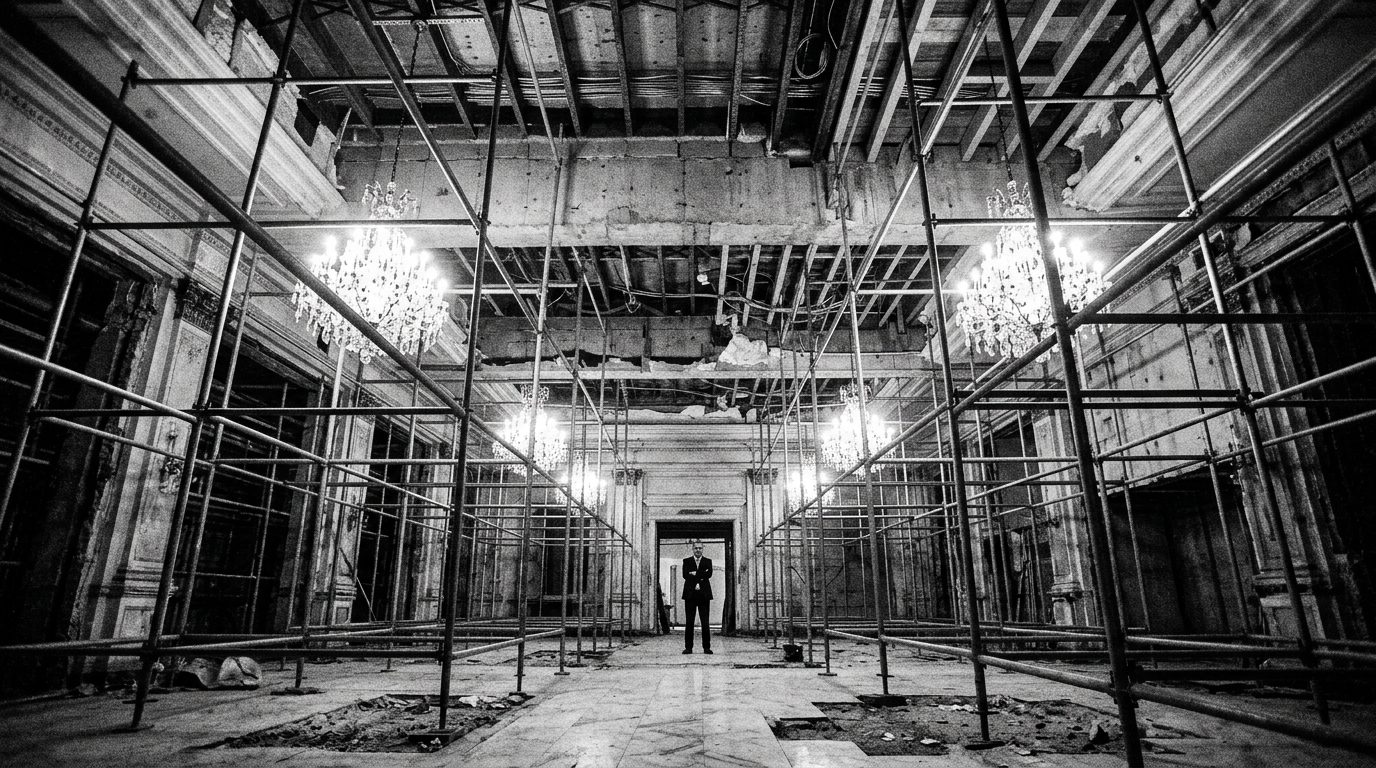
I've seen this movie before. I sat through a version of it at a REIT I worked with years ago... same pitch, same language. "We're concentrating on premium assets. We're exiting non-core properties. We're investing in the future." You know what that sounds like at property level? It sounds like deferred maintenance at the hotels they've decided to sell, and chaos at the hotels they've decided to keep because a $108 million renovation means 18 months of displaced guests, stressed-out staff, and a GM trying to hit numbers while half the building is wrapped in plastic. The strategy looks clean on a slide. It's messy as hell on the ground.
Look... I'm not saying the strategy is wrong. Concentrating capital on your best assets is textbook. The 8.8% dividend yield is real and it's keeping some investors at the table. But there's a math problem here that nobody's talking about loudly enough. They're projecting a swing from negative $283 million to somewhere between $69 and $99 million in net income for 2026. That's a $350 to $380 million swing in one year. The explanation is "renovation stabilization and portfolio focus." Maybe. But analysts are projecting a 1.8% FFO decline by December 2026, and growth doesn't show up until 2027. That's a lot of faith in a turnaround that hasn't happened yet, with leverage that S&P already said is too high, and a RevPAR environment that's giving low-to-mid single digit growth at best. If you're an operator at one of these 34 properties, your margin for error just got very small. Corporate needs your hotel to perform because they don't have 85 other properties to spread the risk across anymore. They have 33.
The proxy also shows CEO compensation at $9.7 million for 2025... down about 7% from the prior year. I'll give them credit for that. But here's the question I'd be asking if I were a shareholder sitting in that room in Tysons on April 24th: you've sold $3 billion in hotels, spent $300 million in CapEx, and the stock is trading in the low teens with a negative credit outlook. At what point does "portfolio reshaping" become "we're running out of things to sell"? Because 34 hotels is a small portfolio for a public REIT. Every disposition from here forward changes the denominator in a meaningful way. And every renovation that doesn't deliver the projected RevPAR lift hits harder when there's no cushion.
If you're a GM at one of Park's 34 remaining properties, understand this: you are now a "core" asset whether you like it or not, and the pressure on your numbers is about to intensify because there's nowhere left to hide in this portfolio. Call your regional VP this week and get clarity on your 2026 CapEx plan and your NOI targets... specifically what "renovation stabilization" means for YOUR property and YOUR timeline. If you're at a property that hasn't been renovated yet, start asking hard questions about when that disruption is coming. And if you're running one of the renovated assets, your job is to prove the thesis. Every point of RevPAR index matters more now than it did when they had 85 hotels.