Cuba's Hotels Are Emptying. 7,000 Workers Already Know What That Feels Like.
Cuba's tourist arrivals dropped 55.8% in early 2026, hotel occupancy hit 21.5%, and international chains are pulling out en masse. The technology story nobody's telling is what happens when an entire country's hospitality infrastructure loses its payment systems, its booking channels, and its skilled workforce simultaneously.
So here's something that should make every hotel technology person uncomfortable: on June 6th, Visa and Mastercard transactions stopped working across Cuba. Not because of a system outage. Not because of a cyberattack. Because a banking partner walked away due to US sanctions, and there was no fallback. No redundancy. No Plan B. An entire country's hotel payment infrastructure went dark because it depended on a single relationship with a single partner, and when that partner left, the system didn't degrade gracefully... it just stopped.
I think about this stuff differently than most people covering it. Everyone's focused on the geopolitics (and fair enough, the new executive order targeting GAESA is massive... we're talking about a military conglomerate that controls roughly 80% of Cuba's foreign exchange and owns 50,000 hotel rooms through its subsidiary). But strip away the politics for a second and look at the technology architecture underneath this collapse. You've got international chains like Meliá terminating contracts on 15 of their 33 properties. Iberostar walking away from 12 hotels. Airlines suspending routes. And now the payment rails are gone. This isn't a market correction. This is a full stack failure... every layer of the technology and distribution ecosystem that makes modern hotel operations possible is being pulled out simultaneously. The Cuban government says national chains will absorb these properties and maintain "normal operations." I've consulted with hotel groups going through technology transitions far less dramatic than this, and I can tell you... there is nothing normal about ripping out an international operator's PMS, revenue management system, distribution connections, loyalty integration, and payment processing all at once and expecting the building to function the next morning.
Look, I get that Cuba's situation is extreme and most of my readers aren't operating under US sanctions. But the underlying vulnerability is universal. I talked to an independent operator last year who had his entire rate management workflow running through a single vendor. When that vendor got acquired and sunset the product with 90 days notice, he was manually updating rates on four OTA extranets for three months while he found a replacement. That was ONE system at ONE hotel. Cuba just lost everything at thousands of properties. The question I'd ask any operator reading this: how many single points of failure exist in your technology stack right now? Your payment processor. Your channel manager. Your PMS vendor. If any one of them disappeared tomorrow (not because of sanctions... because of an acquisition, a bankruptcy, a contract dispute), what's your recovery path? What does the night auditor do at 2 AM when the system that handles 100% of your transactions goes offline and there's no local fallback?
The human cost here is staggering and it shouldn't get lost in the technology analysis. Over 7,000 workers at one resort area alone lost regular employment when hotels closed. Occupancy across the island was 21.5% in the first half of 2025... before the latest sanctions hit. Tourist arrivals are down to 328,608 for the first four months of 2026, a 55.8% decline year-over-year. And the skilled workers who know how to run these properties? They're leaving for other Caribbean destinations that can actually pay them. So even if the political situation resolves tomorrow (it won't), the institutional knowledge is walking out the door. I've seen this at a much smaller scale... a property that lost its entire front office team over six months because management wouldn't address compensation. Rebuilding that team took twice as long as losing it. Cuba is experiencing that at a national level, and the technology infrastructure that could help bridge the gap (automated check-in, dynamic pricing, digital payment alternatives) doesn't exist because the same sanctions that caused the workforce exodus also killed the technology pipeline.
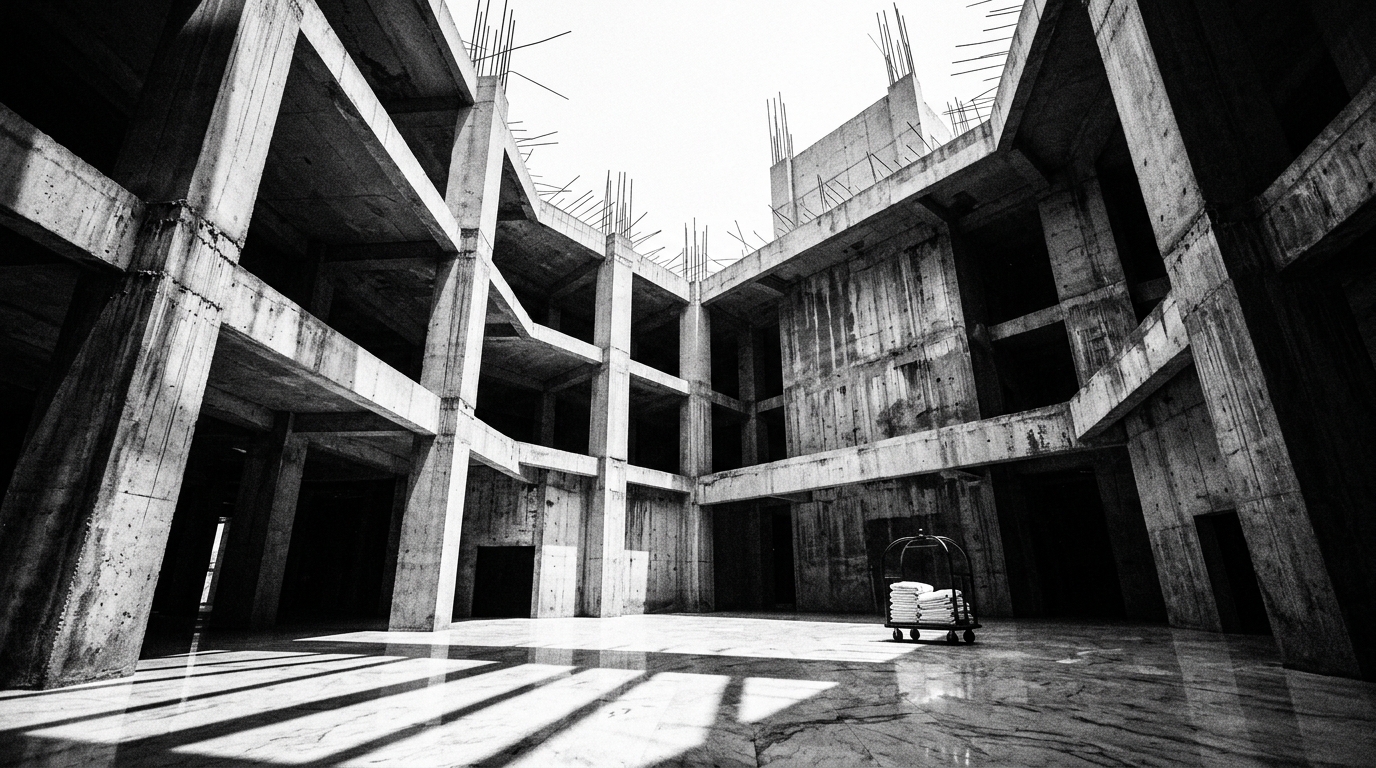
The part that actually keeps me up at night: Cuba's government directed 34.5% of total investment toward tourism in early 2024, up from 27.8% the year before. They're building MORE hotels while existing ones run at 21.5% occupancy. That's not a technology strategy. That's not even an investment strategy. That's building hardware with no software, no distribution, no payment rails, and increasingly no staff to operate it. It's the most expensive version of the "build it and they will come" fallacy I've ever seen... and the workers who depend on these properties for their livelihoods are the ones absorbing the consequences.
Let me be direct. Cuba's situation is geopolitically unique, but the technology lesson is universal and it's sitting in your building right now. This week, I want you to do one thing: map every vendor in your technology stack and identify which ones have no local fallback if they go offline. Your payment processor, your channel manager, your PMS. If you're running a property where a single vendor failure means you can't check in a guest or process a payment at 2 AM, you have a vulnerability that has nothing to do with sanctions and everything to do with architecture. I've seen this movie at smaller scale a dozen times... vendor gets acquired, product gets sunset, and suddenly you're the night auditor with a notebook. Talk to your IT contact (or if you're the IT contact, which most of you are) and ask the ugly question: what's our manual fallback for each critical system? If the answer is "we don't have one," that's your project for this month. It costs nothing but time, and the alternative is finding out the hard way.