Airbnb's Anti-Party AI Blocked 580 Houston Bookings Last July 4th. Hotels Got That Demand for Free.
Airbnb is deploying its machine learning party-detection system in Houston for the fifth straight Fourth of July, redirecting thousands of bookings away from entire-home rentals. If you're running a hotel near a residential STR cluster, you're about to get overflow demand you didn't earn... and probably aren't pricing for.
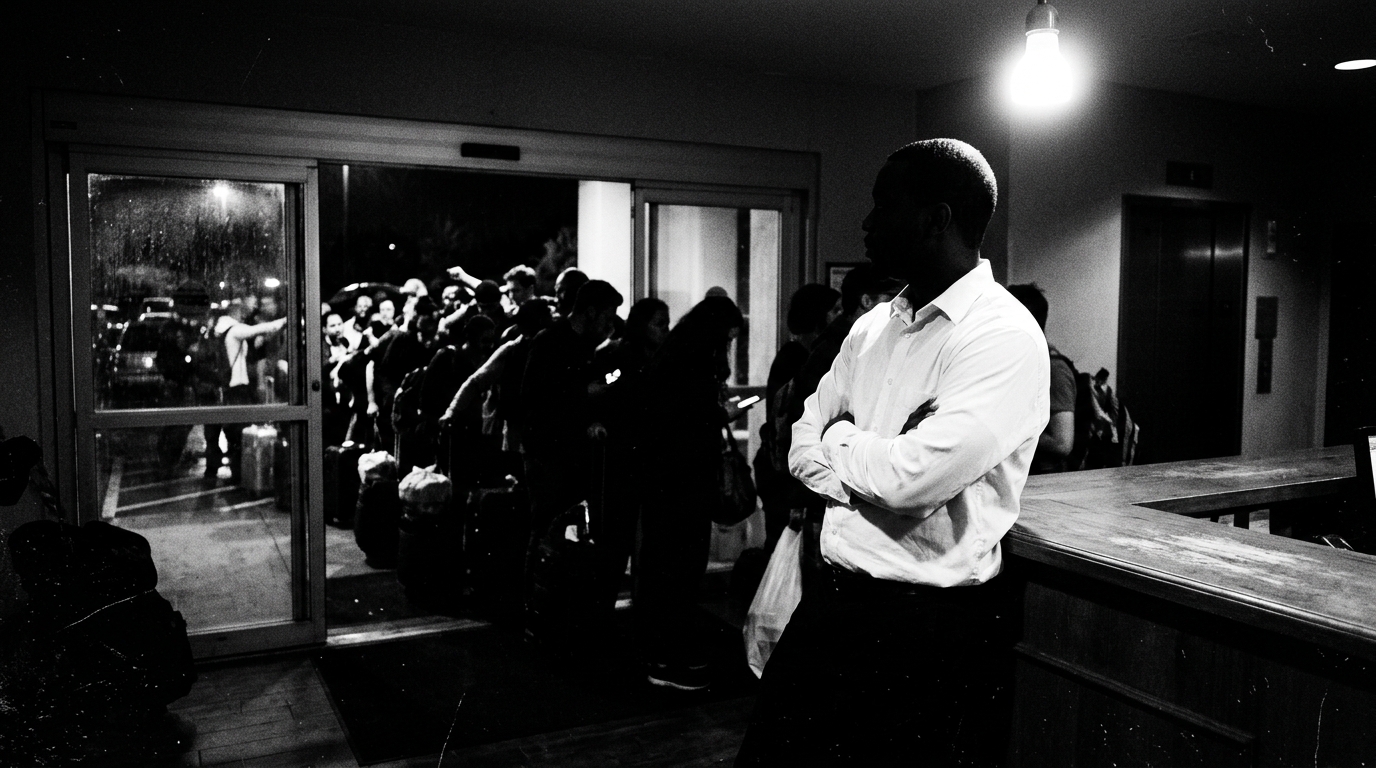
So here's something most hotel tech people aren't talking about: Airbnb has quietly built one of the more sophisticated reservation screening systems in the travel industry, and every Fourth of July, they turn it up to full volume. The system uses machine learning to flag bookings based on proximity to listing, length of stay, whether it's a last-minute reservation, and property type. Last year it redirected over 20,000 people nationally away from entire-home listings during the holiday weekend. In Houston specifically, 580 people got blocked or rerouted. Where do you think those 580 people went?
Let's talk about what this actually does. The system doesn't just reject a booking and leave the guest hanging... it redirects them to alternative accommodations. Private rooms. Hotels. The language Airbnb uses is "redirected to alternative accommodations," which is corporate-speak for "we pushed demand toward your competitors." And look, from a technology standpoint, I respect the engineering. Analyzing booking patterns, guest history, property characteristics, timing signals... that's a legitimate ML application, not one of those "AI-powered" labels slapped on a rules engine. They're actually using behavioral modeling to predict which reservations are likely to result in a party. The fact that party reports dropped over 50% since their global ban in 2020 suggests the system is doing what it's supposed to do. Less than 0.06% of U.S. reservations resulted in a party report in 2024. That's a real number with a real methodology behind it.
But here's the part that interests me as someone who thinks about hotel technology: this is demand reallocation happening through an algorithm that hotels have zero visibility into. You can't see it. You can't predict it. You just notice that your walk-in traffic or last-minute OTA bookings spike on holiday weekends and you assume it's organic demand. It's not entirely organic... some percentage of it is Airbnb's screening system literally pushing people toward traditional accommodations. And with Houston's new STR regulations requiring $275 annual registration fees and prohibiting properties from advertising as event spaces (enforcement started this year), the squeeze on short-term rental supply is coming from two directions at once. Airbnb's own technology AND local regulation. That's a meaningful supply constraint in a market that's about to host FIFA World Cup matches... an event Airbnb themselves project will be their largest booking event in company history. They're simultaneously recruiting new hosts with $750 incentives and blocking the ones most likely to cause problems. That's a company managing both sides of a marketplace, and the technology is the lever.
The Dale Test question here is straightforward: what happens when this system fails? What happens when a legitimate family reunion gets flagged because it's a last-minute booking by a local guest for an entire home over a holiday weekend? A host I talked to recently raised exactly this concern... she said new guests with thin review histories are the most likely to get caught in the filter, which means the system penalizes exactly the people it can't evaluate. That's the classic false-positive problem in any ML screening system, and it tells you something about the confidence threshold Airbnb is using. They'd rather lose a legitimate booking than allow a party. That's a business decision encoded in technology. Hotels don't have to make that tradeoff. You take the walk-in. You take the last-minute booking. Your screening system is a person at the front desk who can read the situation in real time.
Here's what this means if you're running hotel technology strategy: Airbnb is investing heavily in trust-and-safety infrastructure because their business model requires it. Their reputation risk is existential in a way that hotels' isn't. A shooting at a party house makes national news and triggers regulatory crackdowns. A noise complaint at a Hilton Garden Inn gets resolved by the MOD and nobody writes a law about it. The technology gap here isn't that Airbnb has better systems... it's that they NEED better systems because their operating model creates risks that hotels solved decades ago with something called a front desk. Sometimes the oldest technology is still the best technology. An old night auditor I worked with years ago would have appreciated that.
If you're running a hotel in Houston (or any major market with active STR regulation), here's what to do before July 4th: check your pricing for the holiday weekend against actual demand, not last year's demand. You're getting an artificial boost from Airbnb's screening system and from new city regulations squeezing STR supply... price accordingly. Pull your last three years of walk-in and same-day OTA booking data for holiday weekends and look at the trend line. If it's climbing, that's not just pent-up demand... that's redirected demand, and it's likely to continue as long as Airbnb keeps tightening and cities keep regulating. Don't leave it on the table. And for those of you in World Cup host cities... this is a dress rehearsal. The real demand surge is coming, and the operators who understand where that demand is being pushed FROM will price it better than the ones who just see rooms filling up.