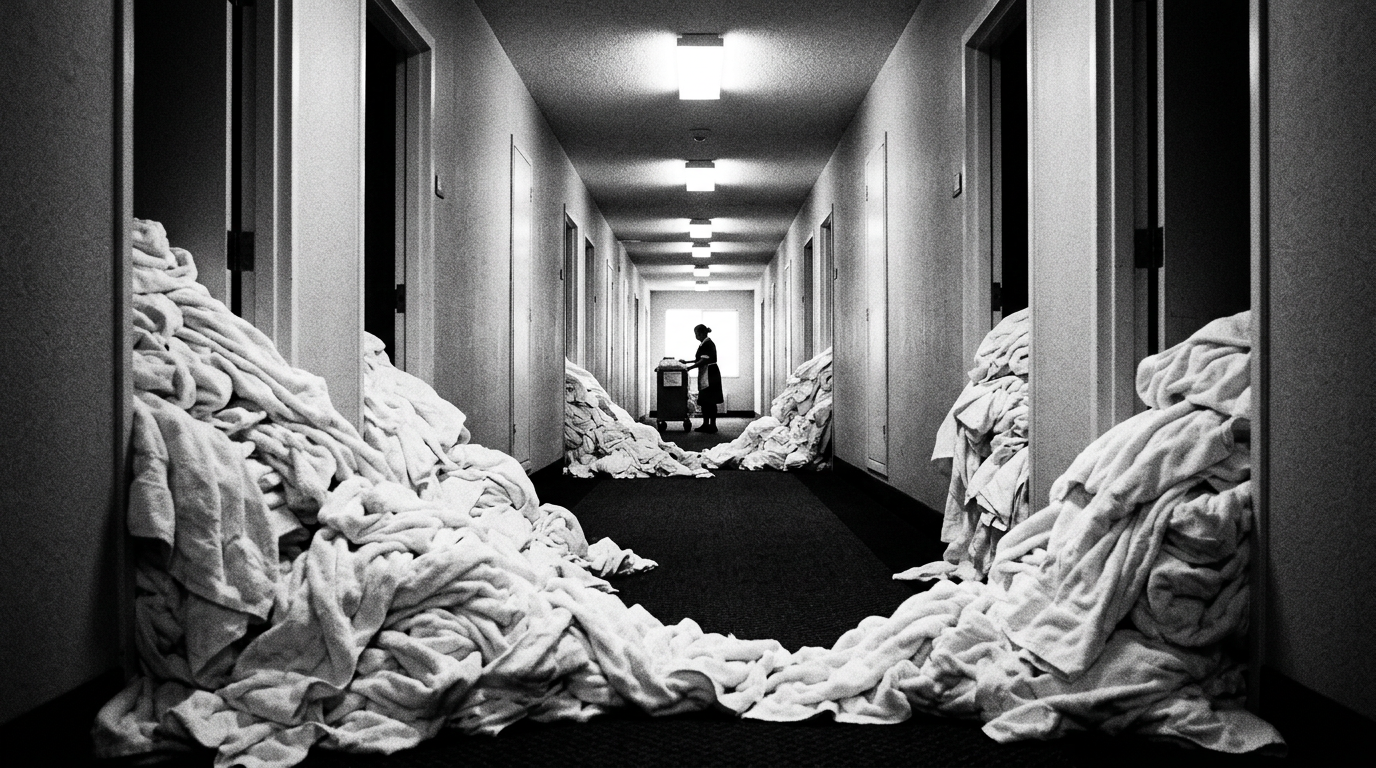
Canada Lost 30,000 Hotel Workers and They're Not Coming Back
The Canadian hotel workforce is still 20% smaller than 2019, but revenue has blown past pre-pandemic levels. Somebody's doing more work for less money, and I'll give you one guess who.
Housekeeping staffing represents a critical operational function for hotels, encompassing recruitment, scheduling, training, and retention of personnel responsible for room cleaning, maintenance, and guest-facing service standards. This workforce directly impacts guest satisfaction scores, operational efficiency, and property profitability. Housekeeping typically constitutes one of the largest labor cost categories for hotel operators, making staffing decisions significant to bottom-line performance.
The housekeeping labor market faces persistent challenges including high turnover rates, wage competitiveness, and workforce availability. Industry dynamics have been shaped by immigration policy, labor organizing efforts, and post-pandemic staffing constraints. Hotels compete for housekeeping talent against other hospitality and service sectors while managing labor cost pressures and service quality expectations.
Recent industry attention has focused on labor compliance and workforce stability within housekeeping departments. Union representation through organizations like Unite Here has increased focus on housekeeping worker conditions, wages, and scheduling practices. For hotel operators and investors, housekeeping staffing decisions carry implications for regulatory compliance, labor relations, operational consistency, and competitive positioning in the market.
The Canadian hotel workforce is still 20% smaller than 2019, but revenue has blown past pre-pandemic levels. Somebody's doing more work for less money, and I'll give you one guess who.
Eighty-five million international visitors are projected for 2026, and every hotel in an NFL host city is about to discover whether their operation is actually built for prime time... or just built for Tuesday nights in October.
Thousands of retail workers are hitting the job market this month from Macy's, Francesca's, Walgreens, and a dozen other chains closing locations. The hotels that post jobs in those ZIP codes this week will staff up for summer... the ones that wait until May will wonder why they're still short-handed.
While hoteliers debate RevPAR strategies, immigration enforcement is quietly targeting the workers who actually clean your rooms. The labor shortage you think is bad? It's about to get catastrophic.