Thailand's Luxury Hotels Are Offering 70% Discounts. Rebuilding Rate Will Take Years.
When $1,000-a-night hotels start selling rooms for under $300, the immediate revenue loss isn't the real problem. It's the rate perception they're burning into every guest's memory that will haunt them long after the flights resume.
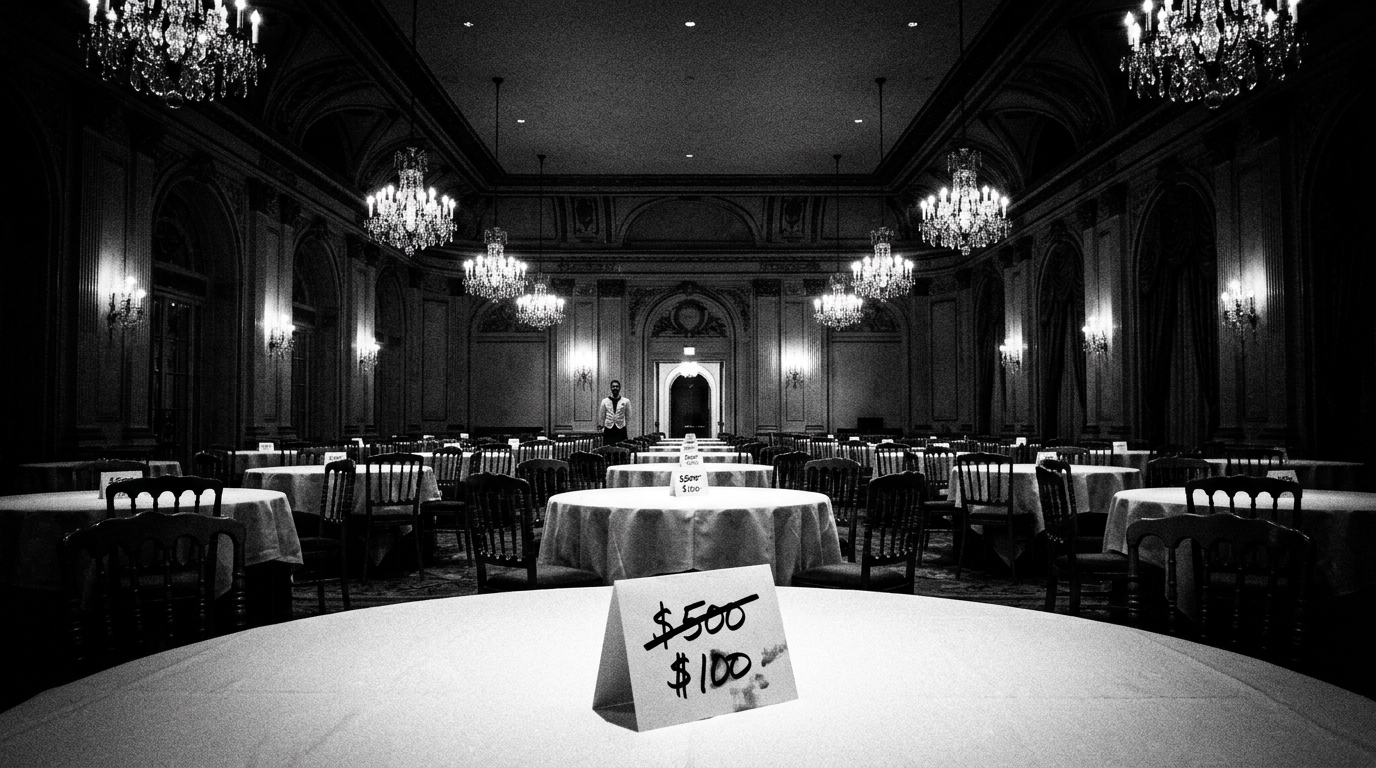
I talked to a revenue manager last month who told me something that stuck with me. She said, "Every rate you publish is a promise about what you're worth. Cut it deep enough, and you're not running a promotion... you're rewriting your identity." She was talking about a domestic property, not Thailand. But the principle is universal, and it's exactly what's playing out across Southeast Asia right now.
Here's what's actually happening. The Middle East conflict has disrupted airspace on the Europe-to-Asia corridor, adding hours and cost to flights that used to be straightforward. European and Middle Eastern arrivals to Thailand are down roughly 16% in a matter of weeks. And the luxury tier... the properties that built their entire operating model around international long-haul travelers paying $800-$1,000 a night... is now scrambling. Properties that would never have looked at the domestic market twice are offering rooms at 50-70% off to Thai nationals and expats. The Mandarin Oriental in Bangkok... under $300 a night with butler service and breakfast. A resort on Railay Beach at $430, nearly half its standard rate. These aren't soft openings or shoulder-season specials. These are distress signals dressed up as promotions.
Look, I get the math. Tourism is 20% of Thailand's GDP. The government's target of 37 million visitors in 2026 is now, in the words of one analyst, "certainly compromised." The Ministry of Tourism itself is projecting a potential loss of 596,000 visitors and $1.29 billion in revenue if the conflict stretches past eight weeks. Individual provinces are already counting losses in the tens of millions. So yeah, the instinct to fill rooms at any rate makes sense when your entire economic ecosystem depends on heads in beds. But here's the question nobody in Bangkok wants to answer: what rate does the Mandarin Oriental charge the next European guest who books after the airspace reopens? Because that guest just saw a $280 room on their Instagram feed. That's the new anchor. That's the number in their head. And the technology platforms... the OTAs, the metasearch engines, the rate comparison tools... they don't forget. Rate history lives forever now. It's indexed, cached, screenshot-able. You can't unpublish a rate the way you used to be able to pull a printed brochure.
This is also a technology story that most people are missing. Thailand's luxury hotels have spent years building direct booking infrastructure, investing in CRM systems, loyalty tech, dynamic pricing engines... all calibrated around a specific guest profile willing to pay a specific rate. When you suddenly pivot your entire demand strategy to a domestic audience at a fraction of the rate, those systems don't just adjust cleanly. Your RMS is optimizing against historical data that no longer reflects your actual demand mix. Your CRM segments are meaningless if 60% of your new guests are a demographic you've never marketed to before. Your distribution strategy, built to minimize OTA dependence for high-ADR international bookings, is now irrelevant because your new guest base books differently, discovers differently, and values differently. The tech stack that was supposed to make you smarter is now making you efficient at the wrong thing. That's the Dale Test failing in real time... not because the system crashed, but because the assumptions underneath it evaporated and nobody recalibrated.
The bigger pattern here matters for anyone running hospitality tech anywhere, not just in Thailand. Geopolitical disruption doesn't give you a six-month warning. It gives you a 16% demand drop in a few weeks, and your entire digital infrastructure either adapts or becomes dead weight. I've seen properties invest $50,000-$100,000 in revenue management and distribution technology, and when the demand shock hits, the GM is back to calling local corporate accounts and posting on social media because the systems weren't built for this scenario. The question every technology vendor should be answering... and almost none of them are... is: how fast can your platform pivot when the guest mix changes overnight? If the answer involves a "custom implementation timeline," you've already lost the revenue.
Here's what I'd tell any GM or revenue leader watching this from outside Thailand... because this isn't just a Thai problem, it's a preview. If your property depends on any single source market for more than 30% of your demand, build a domestic and regional contingency rate strategy NOW, before you need it. Not a panic rate. A planned secondary strategy with its own distribution channels, its own CRM segments, and its own floor. And sit down with your RMS vendor this week and ask them one question: "If my top feeder market disappears in 30 days, how fast can your system recalibrate?" If they hesitate, you have your answer. This is what I call the Rate Recovery Trap. You cut rate to fill rooms today, and you spend the next two years retraining the market to pay what you were worth before the cut. Thailand's luxury properties are about to learn that lesson at scale. Learn it from their example instead.