Five Million International Visitors. Your Front Desk Speaks English. Good Luck.
The World Cup lands in 16 U.S. cities with five million international visitors and hotel rates averaging $524 on match nights. But the operational challenge nobody's solving isn't demand forecasting... it's what happens when a guest from São Paulo hits your front desk at midnight and nobody can understand them.
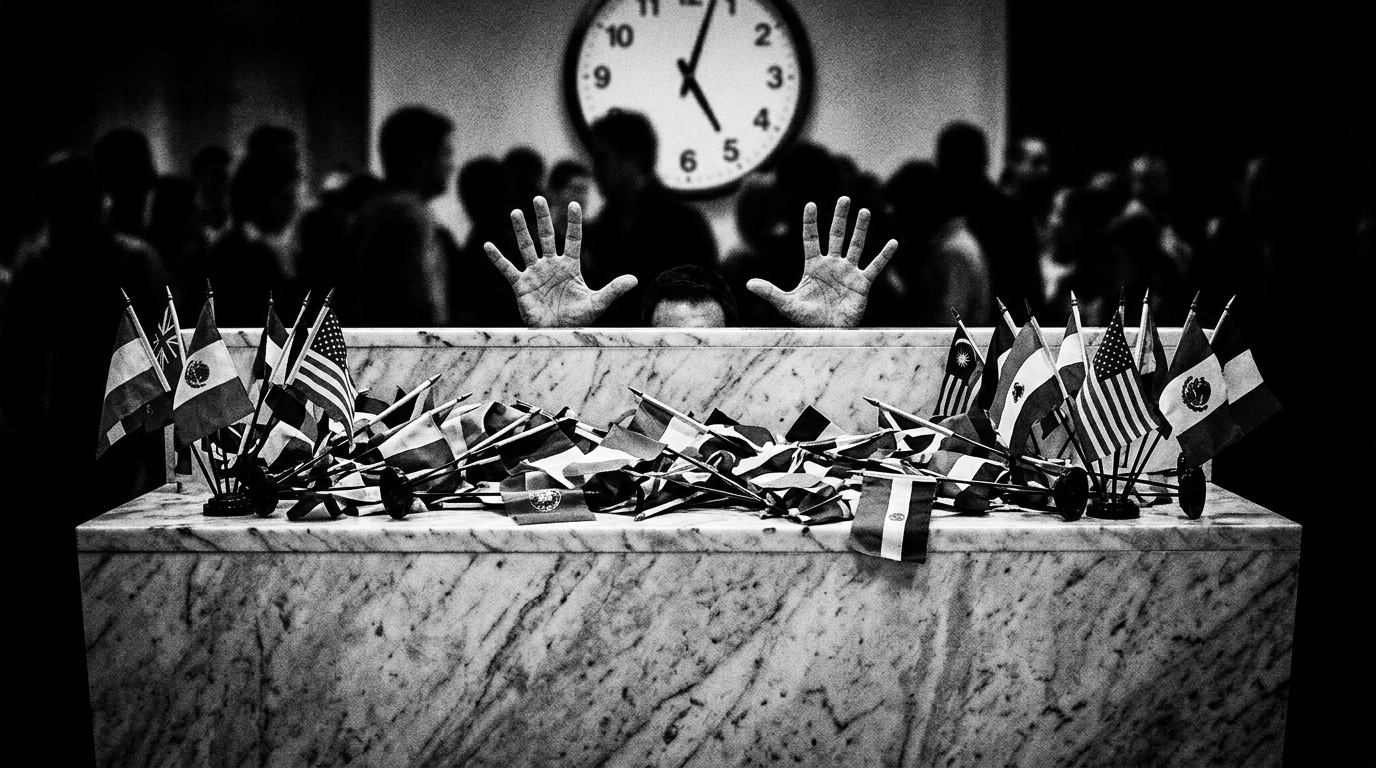
I worked a front desk once during a major international event at a convention hotel. We had maybe 400 rooms, three people on the desk, and a lobby full of guests speaking languages none of us had ever heard in person. Check-in time went from 90 seconds to seven minutes. Seven minutes per guest. You do that math across a sold-out night and your line is out the door by 5 PM. Guests are frustrated before they ever see their room. Your team is exhausted before the dinner rush. And somewhere around hour three, your best front desk agent... the one who's been smiling through all of it... stops smiling. That's when the TripAdvisor reviews start writing themselves.
That's what's coming for every hotel in a World Cup host city this summer. And I'm not sure most properties are ready for it. We're talking about five million international visitors (some estimates say ten million) descending on 16 cities across the U.S. over a tournament window that stretches weeks, not days. This isn't a Super Bowl. A Super Bowl is one city, one weekend, one concentrated burst of demand. This is 78 matches in the U.S. alone spread across markets from Houston to Boston to Seattle. The demand pattern is completely different... micro-peaks around match days, with rates averaging $524 on game nights and $398 on off nights. Thirteen of the sixteen host cities are seeing rate increases of 80% or more year-over-year. Vancouver is pushing $890 a night. And here's the kicker... 80% of hotels in host cities are reporting bookings tracking below initial forecasts. The mega-windfall that everybody projected? It's looking more like a regular windfall with a lot more operational complexity.
The communication piece is the part that should keep you up at night. Not because it's glamorous or because it makes for a great conference panel. Because it's the friction point that turns a profitable event into a guest experience disaster. When you're charging $524 a night and the guest can't communicate a room issue, can't understand your breakfast hours, can't figure out how to get to the stadium... that rate becomes a liability, not an asset. You're charging premium prices and delivering a confused experience. That's how you earn a one-star review from someone who tells 200 friends back home that American hotels aren't worth the money. The article talks about translation devices and technology solutions, and sure, those help. But the real preparation isn't buying a gadget. It's training your team on how to communicate when words fail. Gestures. Visual aids. Printed materials in the six languages you're most likely to encounter. QR codes that link to translated FAQs. The low-tech stuff that actually works at 2 AM when the Bluetooth on your fancy translation device decides to stop pairing.
Here's what else nobody's talking about. FIFA canceled thousands of hotel room blocks back in March across every U.S. host city. That created a booking gap that many properties are still trying to fill. And the demand that IS materializing is skewing domestic, not international. So the actual language barrier problem might be smaller than projected... but it's also less predictable. You don't know which nights will bring a wave of international guests and which will be mostly domestic. You can't staff a multilingual team for 60 straight days. The properties that will handle this well are the ones that build systems, not the ones that hire a couple of bilingual agents and hope for the best. Systems meaning: visual check-in guides, pre-arrival communications in multiple languages, digital compendiums that don't require English, and a staff culture that treats a language barrier as a service opportunity instead of an inconvenience.
The biggest risk here isn't the language barrier itself. It's the gap between the rate you're charging and the experience you're delivering. When you push ADR to $524... or $611 in Boston... or $890 in Vancouver... you are making a promise. You're telling that guest they are going to receive something worth that number. And if the something they receive is a confused check-in, a front desk agent who can't help them, and a shuttle schedule they can't read, you haven't just lost a review. You've lost every future guest that person influences. This is what I call the Price-to-Promise Moment. Every stay has one moment where the guest decides the rate was worth it. For World Cup guests paying double or triple the normal rate, that moment happens fast... and the communication experience is going to be a huge part of whether they walk away thinking "worth every penny" or "never again."
If you're a GM in any of the 16 host cities, stop thinking about this as a demand problem and start thinking about it as a delivery problem. The rooms are going to fill. The question is whether you earn the rate or just charge it. Here's what to do this week: build a visual check-in packet... laminated cards with pictures, arrows, and translated basics in Spanish, Portuguese, French, Arabic, and Mandarin. Cost you maybe $200 at a print shop. Put QR codes on your key packets that link to a translated digital compendium (Google Translate is free and good enough for directions to the stadium and breakfast hours). Run a 30-minute huddle with your front desk team on non-verbal communication... eye contact, patience, pointing to a map instead of giving verbal directions. And brief your housekeeping team too, because they're the ones who'll get the in-room requests they can't understand. The properties that win this summer won't be the ones with the highest rates. They'll be the ones whose guests felt taken care of despite the chaos.